Best Place to buy Bitcoin/Crypto in the US
Learn which crypto exchanges are the best places to buy Bitcoin in the US, based on hands-on testing of fees, apps, trading tools, and funding methods. Compare only legally accessible U.S. platforms with clear pricing and reliable bank/card payments so you can choose confidently.
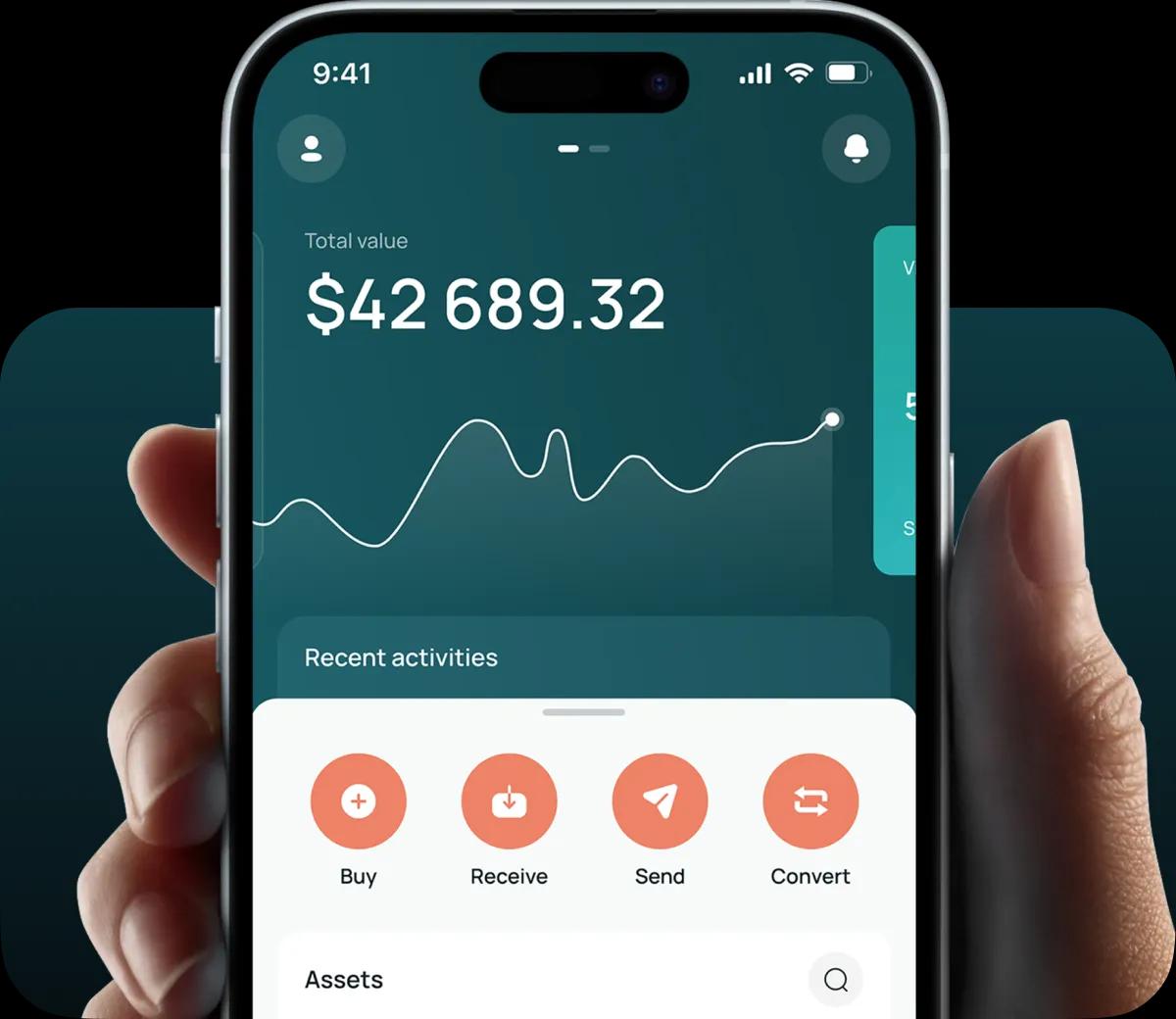
Best Crypto Exchanges Summary
When reviewing the best US crypto exchanges, availability, regulation, and pricing clarity matter most.
The table below compares leading platforms based on U.S. access, payment support, and transparency, making it clear which exchanges actually work for American users and why some stand out more than others.
Exchange | Available to US Users | Pricing Transparency | Payment Methods for US Users | Best For |
CEX.IO | Yes, regulated, broad state coverage | Market price and fees shown clearly before confirmation | Visa, Mastercard, PayPal, ePay, Google Pay, Apple Pay | Clear, card-based Bitcoin purchases |
MEXC | Yes | All-in price shown at checkout, spreads included | Cards, bank-linked funding, limited PayPal support | First-time buyers who want simplicity |
Coinbase | Yes | Transparent on Kraken Pro, higher fees on instant buys | Bank-linked methods, cards with higher instant fees | Large asset selection and advanced trading |
Kraken | Yes | Clear on ActiveTrader, higher fees on standard interface | Bank transfers, debit cards | Compliance-focused US users |
Gemini | Yes | Fees vary by method, final cost shown late | Cards, ACH, in-app funding | App-first users seeking broad token access |
Crypto.com | No, not available in the US | Transparent trading fees, but offshore-only | Not accessible to US users | Non-US traders seeking early token listings |
CEX.IO
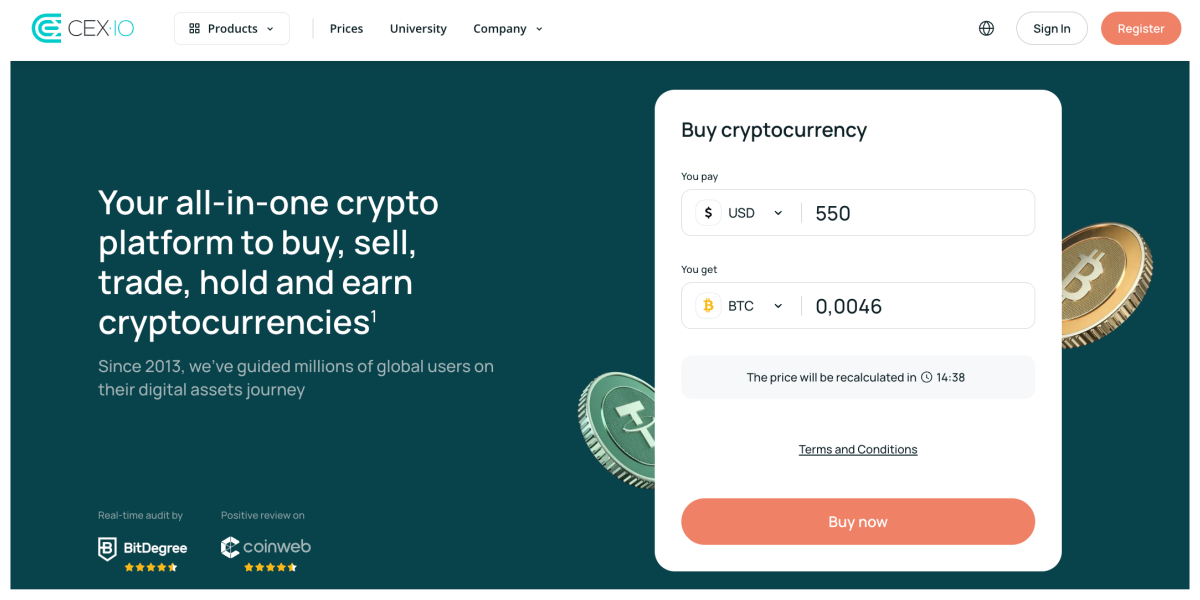
CEX.IO is our top choice and, as such, the best place to buy Bitcoin in the USA, in our opinion. It offers clarity, regulation, and reliable execution.
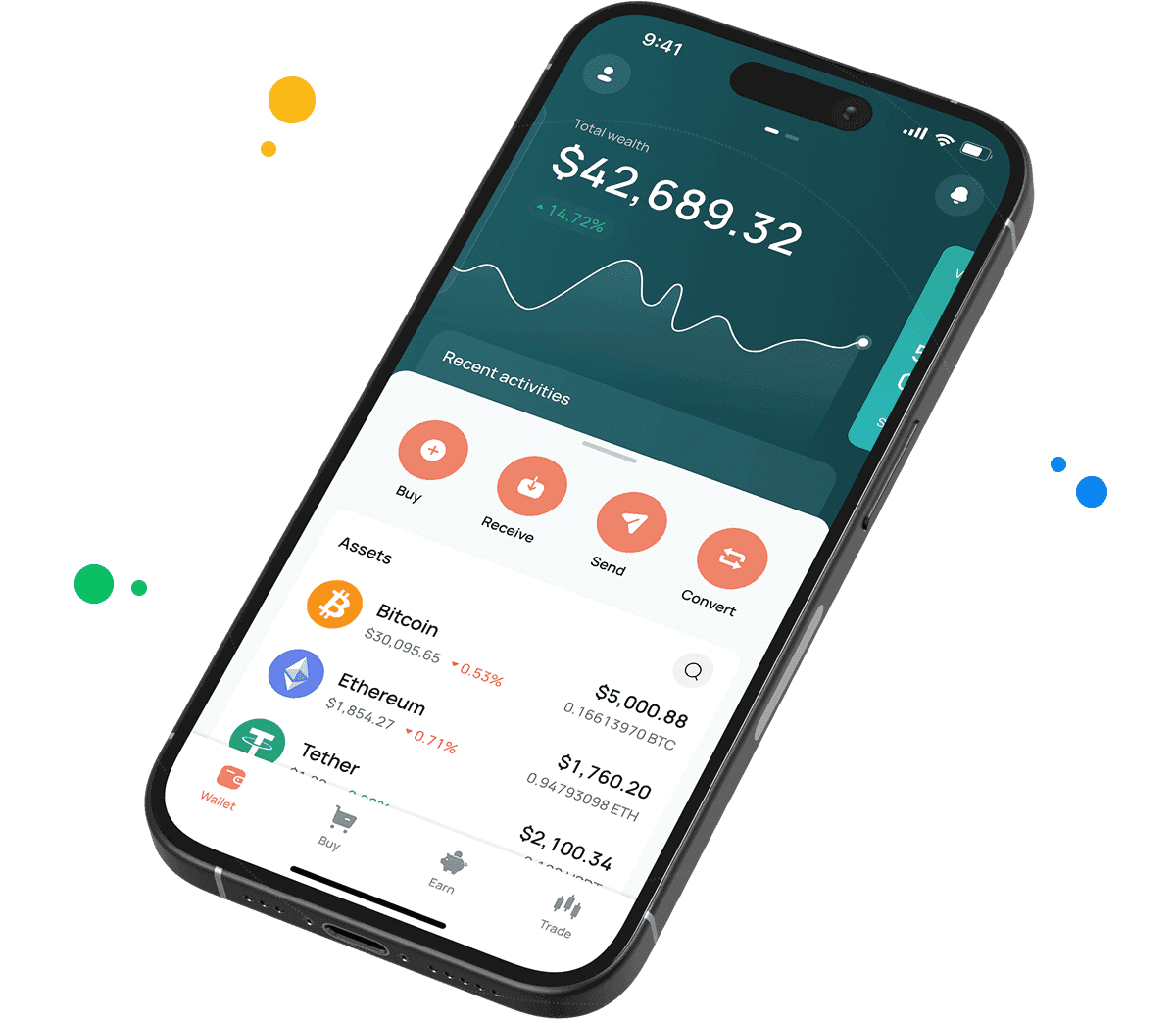
Founded in 2013, it is one of the longest-running regulated exchanges serving U.S. customers. During testing, CEX.IO stood out for transparent pricing, strong card support, and predictable order execution. Unlike Coinbase, which simplifies buying by hiding order mechanics behind spreads, CEX.IO shows exactly what you pay and what you receive. In addition, you get a free CEX.IO Wallet upon registering, available through both the web-based platform and mobile apps for Android and iOS.
For U.S. users who prefer regulated access and straightforward Bitcoin trading and purchases without guesswork, CEX.IO consistently delivers.
Key Features
CEX.IO provides a full set of tools expected from a best crypto exchange, without forcing users into complex workflows. You can buy, sell, convert, stake, and store assets from one account, with clear pricing shown across markets.
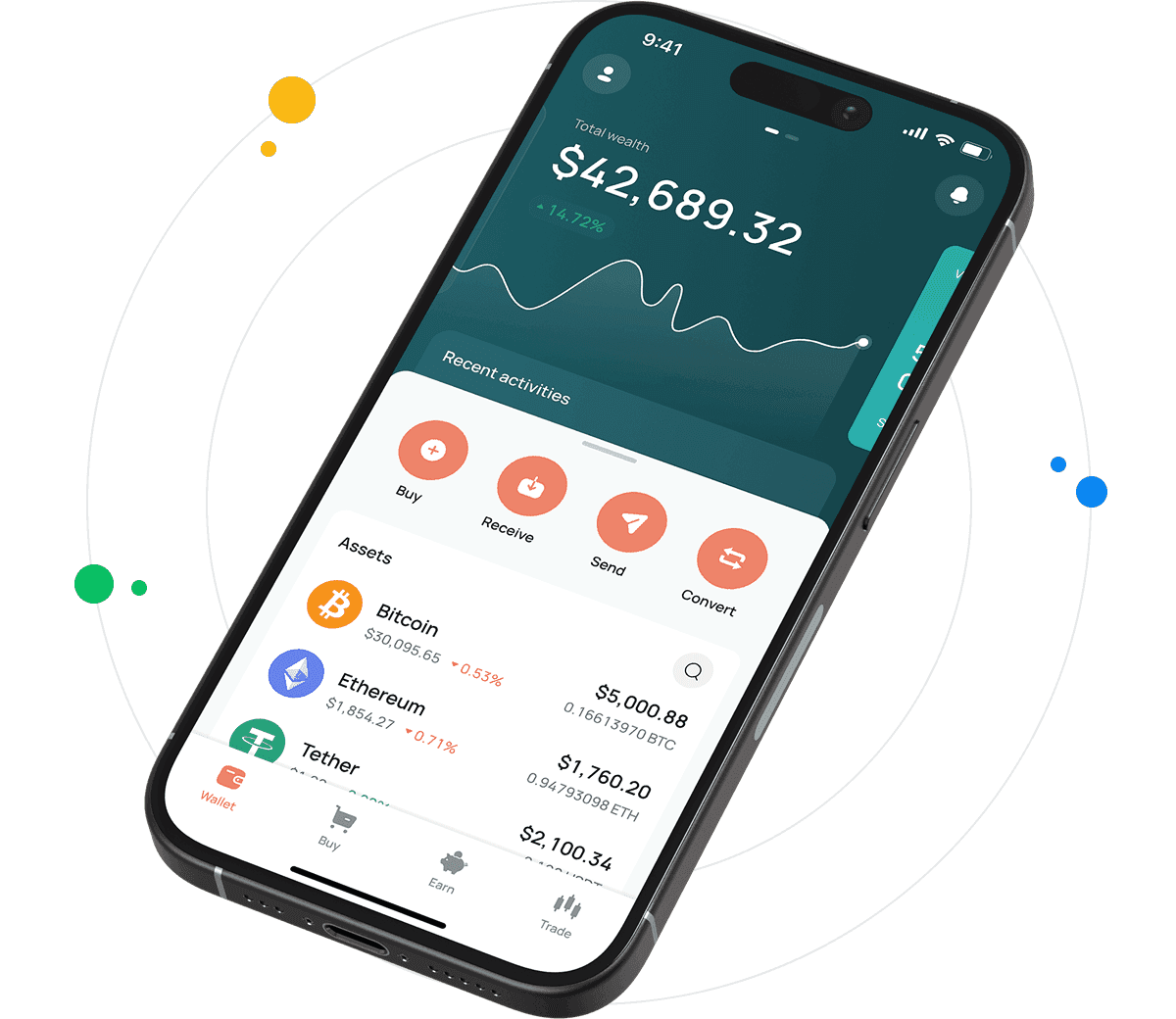
The cryptocurrency prices list is detailed and easy to scan, making it simple to track assets before placing an order. U.S.-based users can fund their accounts with Visa, Mastercard, PayPal, and e-wallets such as ePay, Google Pay, or Apple Pay.
In our tests, card acceptance worked smoothly with major U.S. banks, including JPMorgan Chase, Citibank, and First Citizens Bank.
CEX.IO Pros and Cons
Among crypto exchanges in the US, CEX.IO stands out for reliability and payment flexibility. For users outside the U.S. region, there’s a handy crypto debit card, though this perk is available to EEA residents only. Despite this regional restriction, it’s still a nice touch.
Pros:
- Regulated U.S. entity with broad state coverage
- Transparent pricing and clear order breakdowns
- Strong card acceptance with major U.S. banks
- Wide asset coverage with clear market data
- Crypto debit card available for EEA users
Cons:
- No futures trading
- Some fiat-related fees are higher than crypto-only platforms
Why Choose CEX.IO?
CEX.IO is one of the best US crypto exchanges for users who want to buy Bitcoin with clarity and control. Where Coinbase simplifies the process by bundling spreads and fees into a single price that updates only at checkout, CEX.IO shows real market prices and exact costs before confirmation.
That difference matters. You always know what you are paying for and why. For U.S.-based users who value transparency, regulated access, and dependable card payments, CEX.IO remains the stronger long-term choice
Get crypto with your debit or credit card.
Start your crypto journey today with ease. Buy top cryptocurrencies using your debit or credit card and gain instant access to the world of digital assets.
MEXC
MEXC is a well-known cryptocurrency platform, but it does not operate as a crypto exchange in the US. While the exchange offers an extensive range of tokens and advanced trading tools internationally, it is not licensed to serve U.S.-based customers and restricts access from the United States.
This distinction matters. When comparing crypto exchanges in the US, availability and regulatory alignment are not optional; they define whether a platform is usable at all. In contrast to CEX.IO, which is registered and accessible to U.S. users, MEXC remains an offshore exchange designed for non-U.S. markets.
Key Features
Outside the United States, MEXC crypto exchange is known for listing a very large number of cryptocurrencies, often earlier than regulated platforms. It supports spot trading, staking, and advanced order types, and is frequently used by traders seeking exposure to smaller-cap tokens.
However, these features do not change its status relative to US crypto exchanges. U.S.-based users cannot legally access or fund accounts on MEXC, which places it outside the practical consideration set for American customers when evaluating compliant exchanges like CEX.IO.
MEXC Pros and Cons
When viewed globally, MEXC has strengths, but within the context of crypto exchanges in the US, its limitations are decisive.
Pros:
- Very large global token selection
- Early access to newly listed assets
- Advanced trading tools for non-U.S. users
Cons:
- Not available to U.S.-based users
- No U.S. regulatory registration or licensing
Why Choose MEXC?
For U.S. users comparing crypto exchanges in the U.S., MEXC is not a viable choice. It may appeal to international traders seeking broader token exposure, but it cannot be used legally in the United States.
This is where regulated platforms like CEX.IO clearly differ. CEX.IO is built to serve U.S. customers directly, offering transparent pricing, compliant access, and reliable payment support. For American users, availability and regulation are not features; they are requirements, and MEXC does not meet them.
Binance
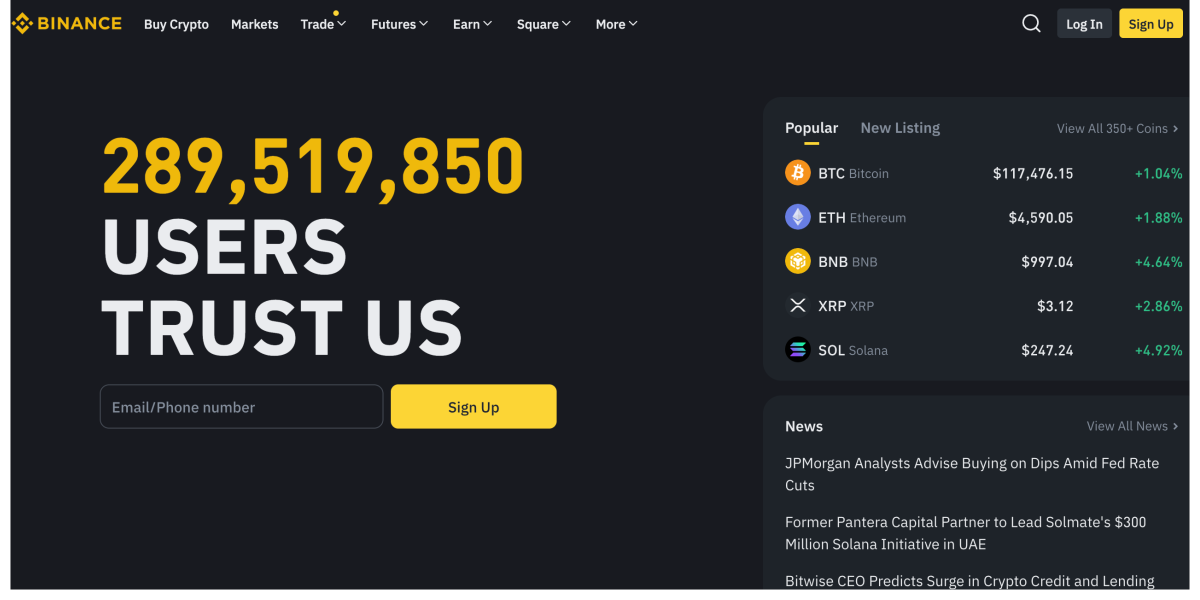
Binance is one of the most recognisable names in global crypto trading, known for its scale and deep liquidity outside the United States.
Founded in 2017, it operates internationally, while U.S. customers are served through a separate platform, Binance.US, with a more limited feature set and asset availability.
Key Features
Globally, Binance offers a broad toolkit that has helped define modern exchanges for crypto. Users outside the U.S. get access to a very large asset catalogue, advanced trading interfaces, staking services, and multiple order types. The platform is fast, highly liquid, and built to handle high-volume activity without noticeable delays.
For U.S.-based users, features are restricted to what Binance.US supports, which means fewer assets, fewer tools, and tighter compliance boundaries. This separation is important when comparing Binance to fully integrated, regulated platforms like CEX.IO that operate under a single, transparent framework for U.S. customers.
Binance Pros and Cons
Binance remains influential globally, but its U.S. setup significantly changes the experience.
Pros:
- Strong global liquidity and brand recognition
- Large international asset selection
- Mature trading infrastructure
Cons:
- Binance.US has reduced features and assets.
- Not fully unified for U.S. users
Why Choose Binance?
Binance makes sense for users outside the United States who want access to a massive global marketplace. For those comparing exchanges for crypto within the U.S., however, Binance.US feels constrained next to platforms like CEX.IO, which provide clearer pricing, consistent features, and direct regulatory alignment for American customers.
Coinbase
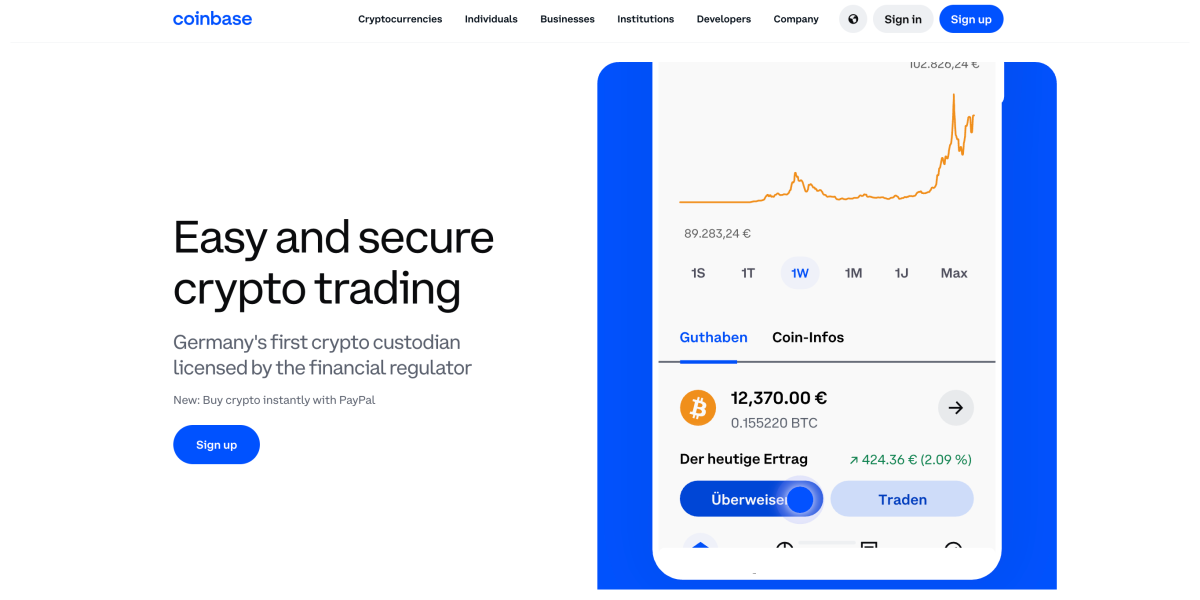
Coinbase is one of the most widely recognised crypto platforms in the United States and often serves as a first stop for new users. Launched in 2012, it built its reputation around ease of use and regulatory visibility.
The platform focuses on reducing friction during purchases, even if that means abstracting away some pricing and order details that more experienced users may want to see upfront.
Key Features
Coinbase is designed to lower the learning curve compared to other crypto exchanges. Users can buy and sell crypto directly from a simplified interface that prioritises speed over granular control. Prices are quoted as all-in amounts, meaning fees and spreads are bundled together and shown only at final confirmation.
The platform offers a hosted wallet, recurring purchases, basic conversions, and an advanced trading view for users who want charts and order books. Asset coverage is solid, though not the widest, and customer support access improves after identity verification.
Coinbase Pros and Cons
Coinbase focuses on accessibility first, which shapes both its strengths and its trade-offs.
Pros:
- Very simple interface for first-time users
- Strong regulatory standing in the U.S.
- Easy onboarding and account setup
Cons:
- Fees and spreads are not always visible upfront
- Limited control in the standard buy flow
(H3) Why Choose Coinbase?
Coinbase is a practical choice for users who value simplicity above all else. Its standard purchase flow removes decisions like order types and timing by executing at the quoted price, which appeals to users who want fast execution without studying market mechanics.
That simplicity is also its limitation. Unlike platforms such as CEX.IO, Coinbase does not clearly separate market price from fees in its basic interface, making cost comparisons harder before checkout.
Gemini
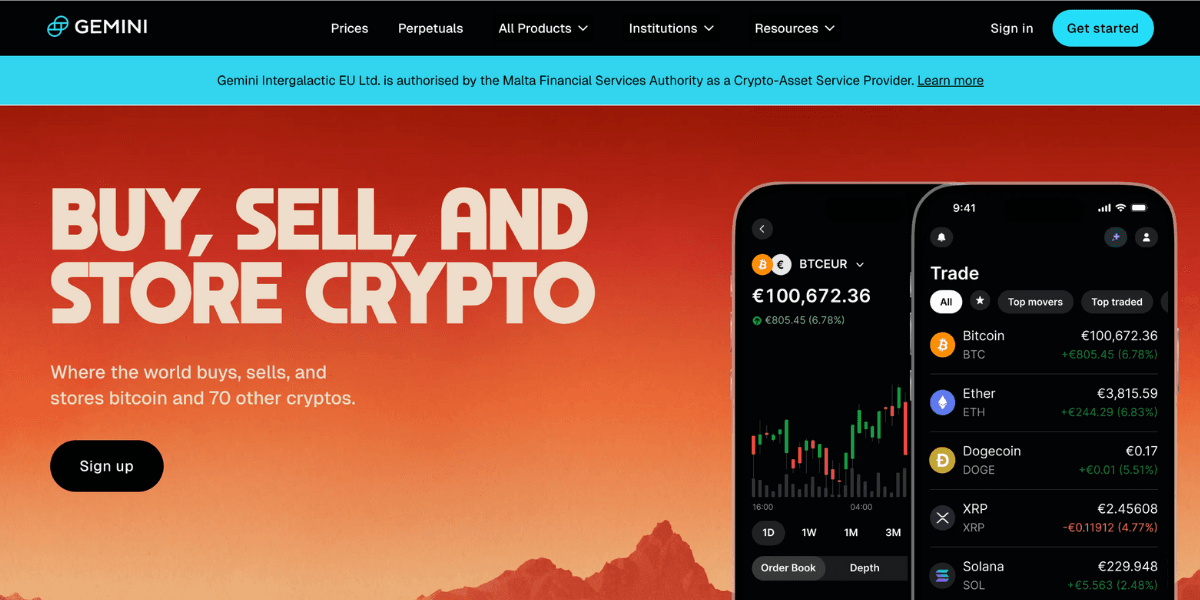
Gemini is one of the top us crypto exchanges, known for its compliance-first approach and conservative product scope.
Founded in 2014 and headquartered in New York, Gemini is built around strict regulatory alignment and custody standards rather than rapid expansion. During testing, it felt clearly designed for U.S. users who prioritise rules, reporting, and institutional-style controls over breadth.
That positioning makes Gemini very different from platforms that chase global scale or fast asset listings. It is deliberate, measured, and sometimes restrictive by design.
Key Features
Gemini supports roughly 80+ cryptocurrencies, which is materially lower than Binance’s or CEX.IO’s global platforms, both of which list 300+ assets. That difference is immediately noticeable when browsing markets. Where Binance adds new tokens aggressively, Gemini limits listings to assets that pass internal risk and compliance reviews.
Fee-wise, Gemini’s standard interface applies a 1.49% transaction fee, plus fixed charges on smaller orders. Binance’s global exchange starts near 0.10% on spot trades, although Binance is not broadly available to U.S. users. Gemini’s ActiveTrader interface lowers fees, but requires manual activation and familiarity with order books.
Gemini Pros and Cons
As an exchange for crypto focused on the U.S. market, Gemini has clear strengths and equally clear constraints.
Pros:
- Strong U.S. regulatory posture
- Clear custody and security controls
- Predictable, compliance-led listings
Cons:
- Narrow asset selection
- Higher fees on standard purchases
Why Choose Gemini
Gemini makes sense for users who value regulatory structure and are comfortable trading a smaller set of assets. Its conservative listing policy reduces exposure to thinly traded tokens, which some users actively prefer. Reporting tools and account controls are also well-suited to users who want clean records and consistency.
That same rigidity is why many users look elsewhere. Fees are high unless you use ActiveTrader, asset coverage lags far behind competitors, and product expansion moves slowly.
If you want flexibility, broader markets, or lower everyday costs, platforms like CEX.IO tend to feel more practical for U.S.-based users.
Crypto.com
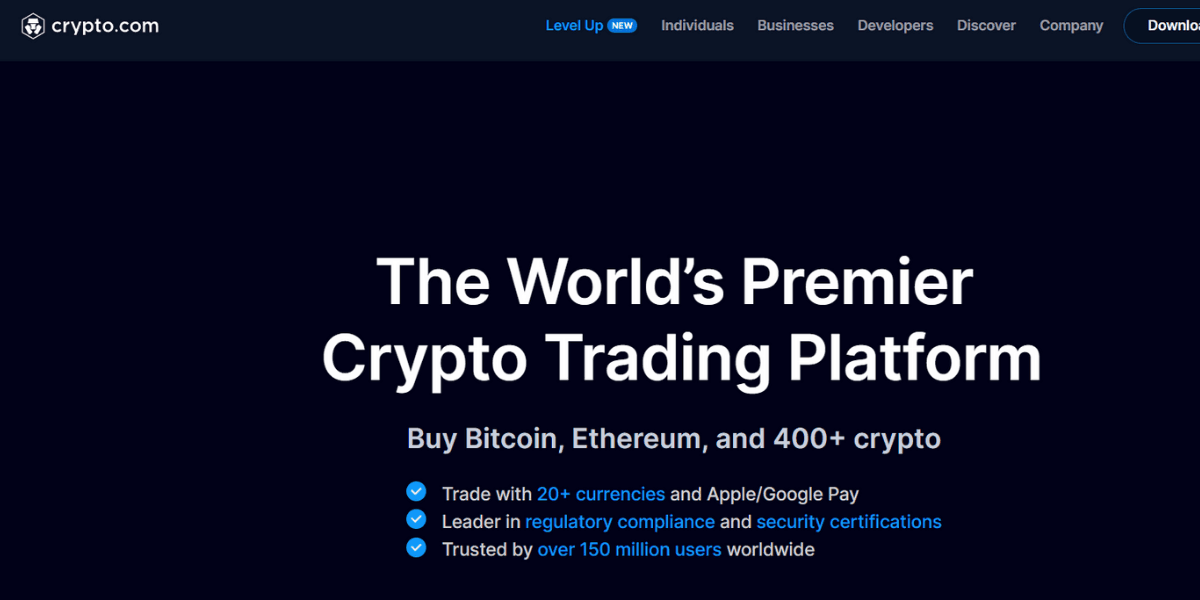
Crypto.com is a well-known brand among crypto exchanges in the US, combining a large asset catalog with an app-first experience. It appeals to users who want access to many tokens from a single mobile interface, alongside extras like rewards and spending tools.
In the U.S. market, Crypto.com operates as a regulated platform, though its structure and pricing feel more complex than those of exchanges focused purely on buying and selling Bitcoin.
Key Features
Crypto.com supports 150+ cryptocurrencies, which is a wider selection than many U.S.-focused platforms. The mobile app is the core product, with buying, selling, staking-style rewards, and portfolio tracking all routed through the same interface.
U.S. users can fund accounts using debit and credit cards and ACH transfers, with card purchases typically carrying a 2.99% fee.
The platform also offers a Visa-powered Crypto.com Card, though availability and rewards depend on CRO balances and program tiers. In our opinion, pricing and fees are less transparent at checkout. Nothing alarming or against the rules, just a general impression when compared to CEX.IO, for example.
Crypto.com Pros and Cons
Crypto.com offers breadth and features, but that comes with trade-offs.
Pros:
- Large crypto selection
- Feature-rich mobile app
- Crypto-linked Visa card
Cons:
- High card purchase fees
- Complex app layout for simple trades
Why Choose Crypto.com?
Crypto.com may suit users who want access to a wide range of tokens and are comfortable navigating a dense, app-driven interface. It is particularly attractive to those interested in app-based rewards and spending integrations.
However, users focused on buying Bitcoin with transparent pricing and predictable execution may find it frustrating. Fees are higher than those of many competitors, and costs are not always obvious until the final step. For U.S.-based users prioritising transparency and straightforward purchases, exchanges like CEX.IO or Binance often feel easier to use and easier to trust long term.
Kraken
Kraken is one of the most established US crypto exchanges, operating since 2011 with a strong emphasis on compliance, custody, and security controls. It is often shortlisted by users who want a long operating history and clearly separated beginner and advanced trading interfaces.
In the U.S., Kraken positions itself as a regulated, infrastructure-first platform rather than a consumer app built around speed or rewards, like Crypto.com.
Key Features
Kraken supports 500+ cryptocurrencies, which is one of the largest selections available to U.S. users. The platform is split between a simplified buy-and-sell interface and Kraken Pro, which offers detailed order books, advanced order types, and TradingView-style charting.
U.S.-based customers can fund accounts via bank-linked methods and cards, with instant purchases carrying a higher fee, typically around 1% plus payment processing costs. Kraken also publishes regular Proof-of-Reserves reports, allowing users to verify asset backing, something still uncommon across US crypto exchanges.
Pros and Cons
Kraken focuses on depth and security, which shapes the overall experience.
Pros:
- Long operating history with no major custody incidents
- Very large asset selection for U.S. users
- Proof-of-Reserves transparency
Cons:
- Instant purchase fees are relatively high
- Interface split across multiple apps can feel fragmented
Why Choose Kraken?
Kraken makes sense for users who value security assurances, asset variety, and detailed market access. Its Proof-of-Reserves disclosures and conservative operational approach appeal to those prioritising custody transparency over speed or simplicity.
That said, Kraken can feel heavy for straightforward Bitcoin purchases. Fees for instant buys are higher than those of its main competitors, and the multi-app structure adds friction for casual users.
If you want deep markets and extensive asset coverage, Kraken is compelling. But if you want fast, clear Bitcoin purchases with predictable costs, CEX.IO often feels more efficient.
Buy crypto instantly with card
Buy Bitcoin, Ethereum and other top cryptocurrencies securely with your debit or credit card. Fast purchases, low fees, easy withdrawals.
Best Alternatives for Crypto Exchanges in the US?
When evaluating crypto alternatives, we still consider CEX.IO the strongest overall choice for U.S. users. It combines regulation, transparent pricing, and reliable card-based access in a way that many platforms struggle to match. That said, every exchange on this list can serve a purpose, depending on what a user values most.
If you do decide to look beyond CEX.IO, start with regulation and jurisdiction. Many platforms advertise low fees or advanced tools but operate outside the U.S., which can limit access, protections, or payment support. Next, examine pricing transparency. Several exchanges obscure costs through spreads or late-stage fee disclosures. A better alternative should clearly show market prices, fees, and final amounts before confirmation, not just at checkout.
Payment access is another key filter. In the U.S., card acceptance, PayPal compatibility, and smooth processing with major banks matter more than long lists of unsupported funding routes. Poor card acceptance or frequent declines are common pain points elsewhere.
Finally, assess custody practices and disclosures. Proof-of-Reserves reporting, clear withdrawal rules, and consistent execution are often missing outside top-tier platforms. In short, any viable crypto alternative should match CEX.IO’s clarity first, before trying to exceed it elsewhere.
FAQ
What is a crypto exchange?
A crypto exchange is a platform that lets users buy, sell, and convert digital assets like Bitcoin using fiat or crypto. The best exchanges for crypto typically offer regulated access, transparent pricing, secure custody, and reliable payment methods tailored to their supported regions.
How to choose the best crypto exchange in the US?
To choose the best cryptocurrency exchange in the US, focus on regulation, pricing transparency, and payment reliability. Look for platforms registered with U.S. authorities, clear fee breakdowns before checkout, strong card or PayPal support, and consistent withdrawal processing with major U.S. banks.
What is the safest crypto exchange in the USA?
Among the best US crypto exchanges, CEX.IO stands out for safety due to its long operating history, U.S. regulatory registration, and strong compliance standards. It has operated since 2013 without major security breaches, employs layered security controls such as 2FA and cold storage, and provides clear custody and withdrawal rules for U.S. users.
Which crypto exchanges are allowed in the USA?
Crypto exchanges allowed in the USA must be registered with U.S. regulators and comply with KYC and AML rules. Examples include CEX.IO, Coinbase, Kraken, Gemini, and Crypto.com. Availability can still vary by state, so users should always check local access before signing up.
How do I choose the right crypto exchange?
When choosing among top US crypto exchanges, focus on regulation, pricing transparency, and payment support. Prioritize platforms that clearly show fees before checkout, work reliably with U.S. cards or PayPal, and offer consistent withdrawals. Security history and customer support quality also matter more than flashy features.
What services do crypto exchanges offer?
Most platforms provide spot trading for buying and selling crypto at market prices, along with wallets and fiat on-ramps. Some of the best crypto margin trading exchanges also support margin trading, allowing larger positions under defined rules. Advanced users may access API connections for automated and programmatic trading.
Which crypto exchanges offer the lowest fees in the USA?
Among the best crypto exchanges in the USA, fees vary significantly depending on the trading mode. CEX.IO charges 0.25% for spot trades at the lowest tier, dropping to 0.10% at higher volumes. Kraken Pro starts at 0.25% maker / 0.40% taker, decreasing with volume. Coinbase Advanced begins at 0.40% maker / 0.60% taker, while its standard interface is higher due to embedded spreads.