Crypto Exchanges in the US
Choosing a crypto exchange in 2026 matters for U.S. customers, because not every global platform is fully available or licensed in the United States. U.S.-based traders generally weigh licensing, fiat support, and custody arrangements alongside fees and coin selection. Crypto is a high-risk, volatile asset, and no exchange removes that risk. This guide reviews four platforms available to U.S. users, Kraken, Binance.US, Coinbase, and Gemini, and compares regulation, fees, and supported assets.
Educational Notice: This article is provided purely for informational and educational purposes. It does not constitute financial, investment, or legal advice, nor does it represent an offer, solicitation, or recommendation to trade digital assets or register with CEX.IO.
Best Crypto Exchanges Summary
Choosing a crypto exchange in 2026 matters for U.S. customers, because not every global platform is fully available or licensed in the United States. U.S.-based traders generally weigh licensing, fiat support, and custody arrangements alongside fees and coin selection. Crypto is a high-risk, volatile asset, and no exchange removes that risk. This guide reviews four platforms available to U.S. users, Kraken, Binance.US, Coinbase, and Gemini, and compares regulation, fees, and supported assets.
Summary
| Exchange | Suited For | Fee Model | Coins Listed (approx.) | U.S. Availability |
|---|---|---|---|---|
| Kraken | Experienced traders, compliance focus | Volume-based maker and taker | 200+ | Available; some services limited in certain states |
| Binance.US | Higher-volume traders | Maker and taker, with BNB discounts | ~135 (Binance.US) | U.S. users limited to Binance.US, which lists fewer coins than global Binance |
| Coinbase | New users, mobile | Volume-based maker and taker (entry 0.40% maker / 0.60% taker) | 200+ | Available |
| Gemini | Users focused on regulation | Fixed % (Instant / Recurring / Limit) plus ActiveTrader | ~70 to 80 | Available; licensed in New York and most states |
Coin counts and fee tiers change over time, so confirm current figures on each platform before opening an account.
Kraken
Founded in 2011, Kraken is one of the longer-established cryptocurrency exchanges available to U.S.-based traders. It supports over 200 digital assets and holds regulatory licensing across a range of U.S. jurisdictions. Kraken's focus has been on security, transparency, and compliance. Its interface is oriented to experienced users, who tend to value its professional-grade tools and long operating history.
Key Features
Kraken offers Spot Trading, staking on eligible assets, over-the-counter (OTC) services for high-volume orders, and spot margin trading. In May 2026, Kraken launched regulated U.S. spot margin trading on Kraken Pro with up to 10x leverage for eligible users, alongside collateral controls, liquidation levels, and risk disclosures. Its custodial wallet connects to Spot Trading and standard payment methods. The layout is aimed at users who need professional tools, and newcomers may find it less approachable than platforms built around a simpler flow.
Kraken Pros and Cons
Kraken holds U.S. licensing, publishes a transparent fee schedule, and has a long operating record.
Pros:
- Licensed across a range of U.S. jurisdictions
- 200+ supported coins
- Long operating history since 2011
- Staking and OTC services
- Transparent, volume-based fee schedule
Cons:
- Spot margin leverage caps at 10x
- Limited fiat gateways, with no PayPal support
- Interface has a steeper learning curve for newcomers
Why Choose Kraken
Kraken suits U.S.-based traders who prioritise regulatory standing and professional tools over a simplified interface. It operates under U.S. regulatory oversight, and it offers OTC services and staking for users who need them. For users who value a long operating record and a transparent fee schedule, Kraken is an established option in 2026.
Binance
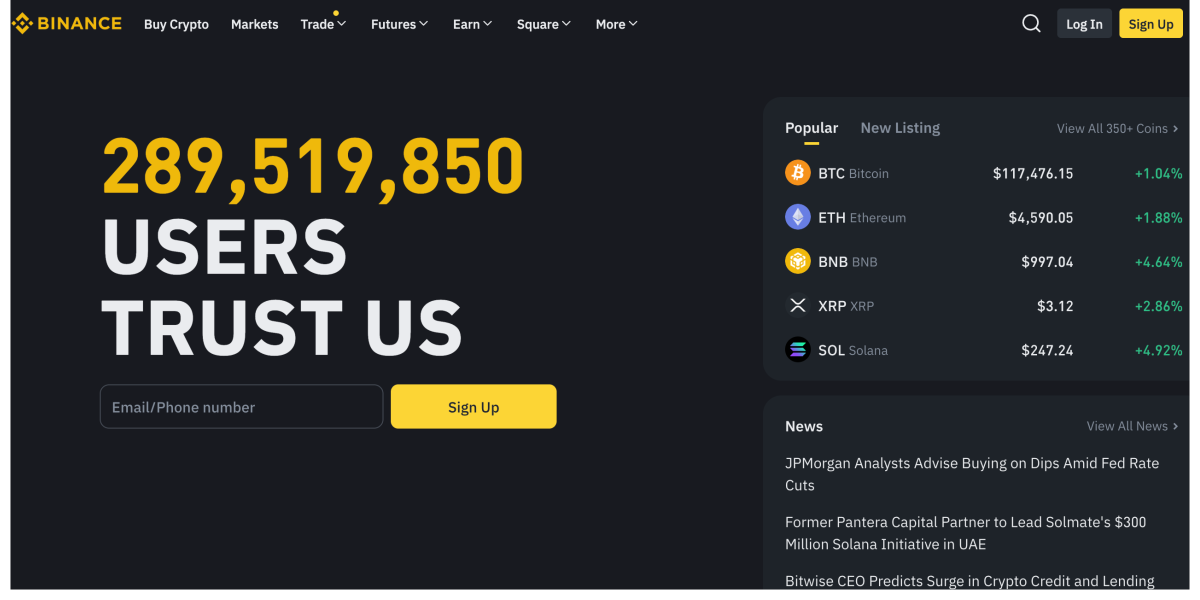
Founded in 2017, global Binance grew into one of the largest cryptocurrency exchanges by trading volume, known for deep liquidity and a wide feature set. U.S.-based users cannot use the global platform and instead use Binance.US, which lists a smaller set of assets, currently around 135 coins, and fewer features than the global version. Binance.US competes on fees and offers professional trading tools.
Key Features
Binance.US provides Spot Trading, staking, and a maker and taker fee model with discounts when fees are paid in BNB. Global Binance offers a broader ecosystem, including derivatives and additional products that are not all available to U.S. users. Binance.US is oriented to active traders and offers competitive fees, while its coin selection and feature set are narrower than the global platform. Some tools may be more than beginners need.
Binance.US Pros and Cons
Binance.US competes on low fees and liquidity, though U.S. access is limited to the reduced Binance.US product, and the wider Binance business has faced regulatory scrutiny in some markets.
Pros:
- Competitive fees, with BNB fee discounts
- Established trading infrastructure and liquidity
- Spot trading and staking
Cons:
- U.S. users are limited to Binance.US, with fewer coins and features
- Regulatory scrutiny in some markets
- Fewer fiat options than some U.S. competitors
Why Choose Binance.US
Binance.US suits U.S. traders who want competitive fees and are comfortable with a narrower product than global Binance. It offers spot trading and staking with a fee structure aimed at active users. Traders who need the broadest asset range or advanced derivatives will find those are not fully available to U.S. accounts.
Coinbase
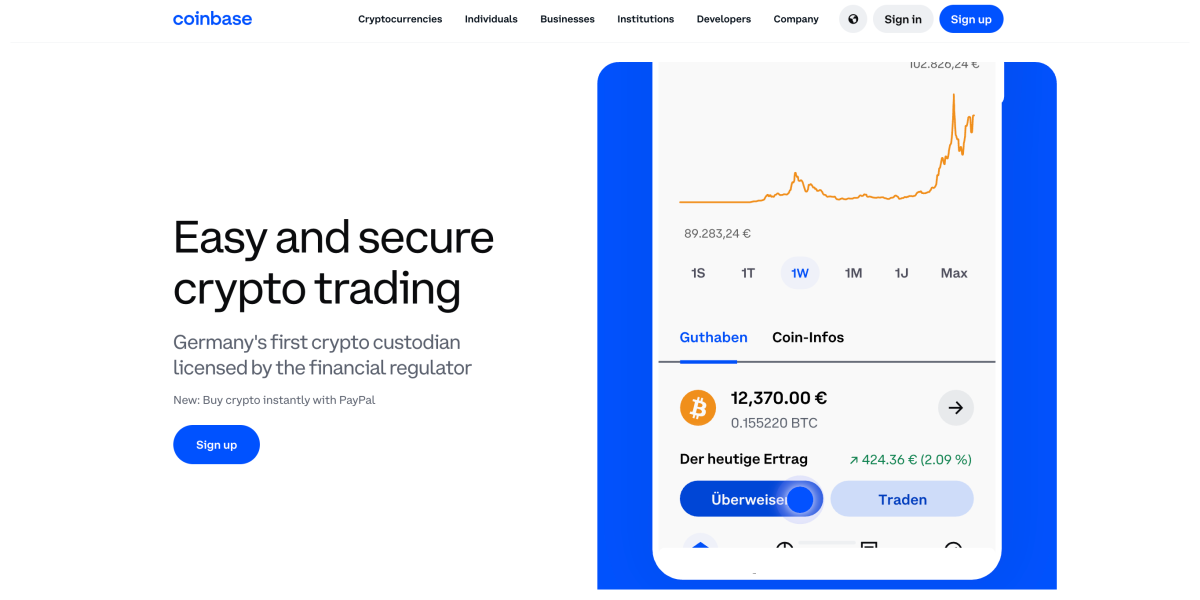
Founded in 2012, Coinbase is one of the most recognised U.S.-based crypto exchanges. It holds U.S. regulatory registrations and lists more than 200 assets. Coinbase is available in over 100 countries and is often a starting point for users buying Bitcoin or Ethereum for the first time. Its coin selection is smaller than global Binance.
Key Features
Coinbase provides a basic buy flow for purchases with debit cards or bank transfers, and Coinbase Advanced Trade adds order types and more detailed charting for experienced users. Entry-level Advanced Trade fees are 0.40% maker and 0.60% taker, which are higher than several competitors, and they decrease with volume. Coinbase publishes educational content and provides custody solutions with insurance on certain custodial holdings.
Coinbase Pros and Cons
Coinbase's characteristics are U.S. regulatory registration and an interface aimed at new users. Its fees are higher than several competitors at the entry tier.
Pros:
- Licensed and registered in the U.S.
- Interface aimed at new users, on mobile and web
- 200+ supported assets
- Educational content
- Custody solutions with insurance on certain holdings
Cons:
- Higher entry-level trading fees than Binance.US
- Fewer coins than global Binance
- Advanced tools require a separate interface
Why Choose Coinbase
Coinbase suits U.S. users who want a recognised, U.S.-registered platform and an interface aimed at first-time buyers. It provides a route to buy Bitcoin and other assets, educational material, and custody with insurance on certain holdings. Users who want lower fees or more advanced tools can use Coinbase Advanced Trade or compare other platforms.
Gemini
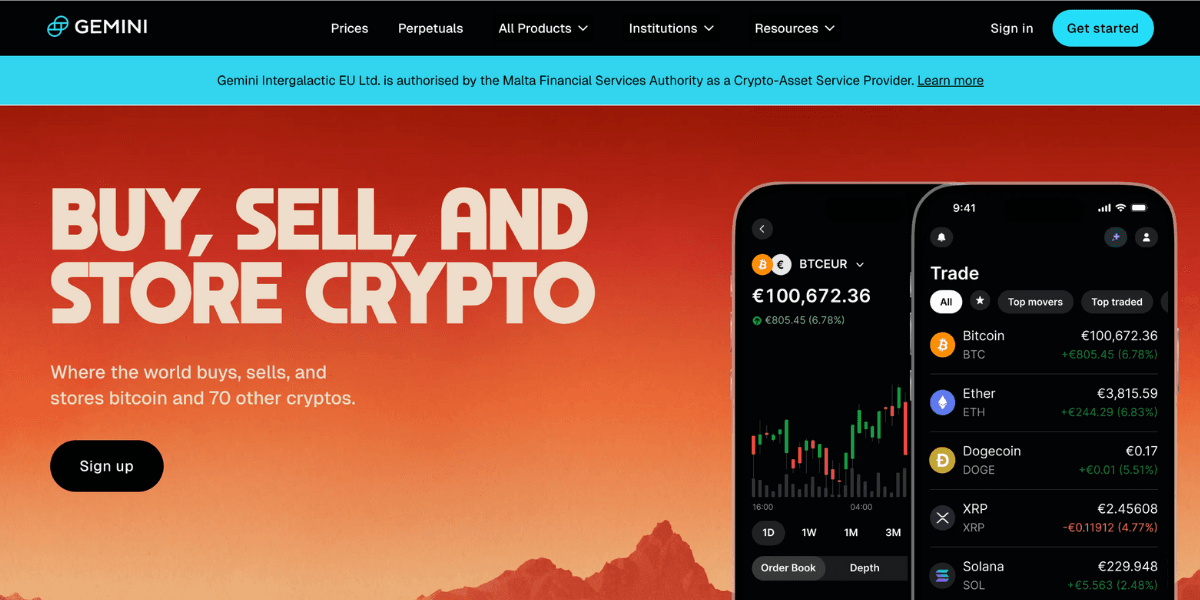
Founded in 2014 by Cameron and Tyler Winklevoss, Gemini is a compliance-focused U.S. crypto exchange. It is licensed in multiple states, including New York, and documents its custody and security practices. Gemini supports around 70 to 80 assets, a narrower range than the other platforms here, and positions itself for users who prioritise regulatory standing over coin variety.
Key Features
Gemini documents strong regulatory credentials and custody practices, including insurance on assets held in its hot wallet. Its basic web interface and Instant Buy carry higher convenience fees, while the ActiveTrader interface offers lower fees, with spot trading fees starting around 0.25% at the entry tier. Gemini offers fewer trading pairs than Binance and lists fewer assets than the other platforms in this comparison. Its Gemini Earn program has faced regulatory setbacks that limited interest-earning services for U.S. customers.
Gemini Pros and Cons
Gemini documents its compliance and custody practices, and it offers a narrower asset range and higher convenience fees on its basic interface.
Pros:
- Licensed and regulated in the U.S., including New York
- Documented security and compliance practices
- Insurance on custodial assets held in the hot wallet
- ActiveTrader interface with lower fees than the basic web flow
- Educational content
Cons:
- Smaller coin selection, around 70 to 80 assets
- Higher convenience fees on the basic web interface and Instant Buy
- Limited staking and earning features in the U.S.
Why Choose Gemini
Gemini suits U.S. users who prioritise regulatory standing and documented custody over asset variety or the lowest fees. It is licensed in multiple states, documents its custody and insurance practices, and offers the ActiveTrader interface for users who place limit orders to manage costs. Its asset range and earning features are more limited than several competitors.
FAQ
What is a crypto exchange?
A crypto exchange is a digital marketplace where users can buy, sell, and trade cryptocurrencies using fiat money or other digital assets. Exchanges differ in liquidity, security practices, supported assets, and interface, and they serve both new and experienced traders.
How do I choose a crypto exchange?
Consider regulation and licensing, supported payment methods, trading fees, security practices, and interface. Users can check whether a platform is licensed or registered in their jurisdiction, compare fee schedules, and confirm that the assets they want are supported before opening an account.
How is crypto exchange security assessed?
Exchange security depends on factors such as regulatory licensing, cold storage of assets, custody insurance, and two-factor authentication. Among the platforms here, Kraken publishes information on its security practices, Coinbase provides insurance on certain custodial holdings, and Gemini documents custody insurance on hot-wallet assets. No exchange removes all risk, so users should review each platform's current security documentation and enable two-factor authentication.
Do all of these exchanges support Bitcoin?
Yes. Each platform in this guide supports Bitcoin, though the range of services and payment methods varies. Some exchanges add derivatives or staking, while others focus on spot buying and selling. Confirm availability and the specific services you need before registering.
Are crypto exchanges safe to use?
Crypto exchanges apply measures such as cold storage, encryption, KYC and AML checks, and two-factor authentication. Regulatory licensing and transparency also matter. Using a licensed, regulated exchange reduces some risks, but crypto remains a high-risk, volatile asset and no platform can guarantee zero risk.
What are the crypto exchanges available in the US?
Among the platforms in this guide, Kraken, Coinbase, and Gemini are licensed or registered to serve U.S. customers, and U.S. users of Binance access the separate Binance.US platform, which lists fewer coins and features than global Binance. Regulatory statuses change over time, so users should confirm current availability and licensing before opening an account.