Best Crypto Staking Platforms
Learn what truly separates major crypto staking platforms, from how rewards are generated and credited to withdrawal rules and asset mobility. Compare the key trade-offs so you know what to expect before committing your crypto—whether you’re staking for the first time or optimizing your setup.
Everything You Should Know About Crypto Staking Platforms
Before placing assets into a staking platform, it’s worth taking a step back and understanding how these services actually work. Staking rewards are not set by exchanges; they come from the underlying blockchain networks and can change as network conditions shift.
This means percentages you see today may look different over time. Another key point is access to your assets. Some platforms allow you to trade or move staked assets freely, which is the case with CEX.IO Staking, but more about that later on, while others follow protocol-level withdrawal periods that can last days or even weeks.
Reward timing also matters. Depending on the platform, rewards may be credited daily, monthly, or only after a fixed period ends, which affects how easily you can track returns. Finally, pay attention to how products are presented. Platforms that clearly separate staking, savings, and other yield-style services tend to be easier to navigate for beginners and reduce the chance of placing assets into a product you did not intend to use.
Table
Before diving into the individual platform reviews, the table below offers a quick side-by-side overview of how the major crypto staking platforms compare.
It highlights the key differences that tend to matter most in practice, such as how staking and savings are structured, how easily you can access assets while they’re in use, and how rewards are handled.
This snapshot can help you quickly narrow down which platforms are worth a closer look based on your priorities.
| Platform | Staking & Savings Structure | Asset Access While Staked | Reward Handling & Fees | Best Suited For |
| CEX.IO | Staking and Savings are clearly separated into distinct products | Staked assets remain tradable, no protocol unbonding delays | Hourly calculations, monthly payouts, no separate staking fee | Users who want clarity, predictable access, and a low-maintenance setup |
| Binance | Multiple staking formats, campaigns, and product types for the same asset | Depends on product, some formats restrict access | Rates vary by product, and fees are often embedded in displayed percentages | Users who want wide asset coverage and actively track product terms |
| Kraken | Bonded and flexible staking based on protocol rules | Bonded assets locked during unbonding periods | Rewards follow network rules, no instant exit for bonded assets | Users interested in protocol accuracy and on-chain mechanics |
| Bybit | Staking, lending-style products, and strategy-based programmes combined | Access depends on product type and network rules | Rates vary widely by product, and structure differs per section | Users who like comparing strategies and campaign-driven products |
| Crypto.com | App-based staking tied to account tiers and ecosystem features | Access varies, higher rates often linked to CRO lockups | Commission applied, higher rates depend on tier level | App-first users holding less common staking assets |
| Coinbase | Guided, compliance-first staking with liquid and bonded formats | Unstaking follows strict network timelines | Commission deducted from rewards | Users prioritising regulation and institutional infrastructure |
CEX.IO
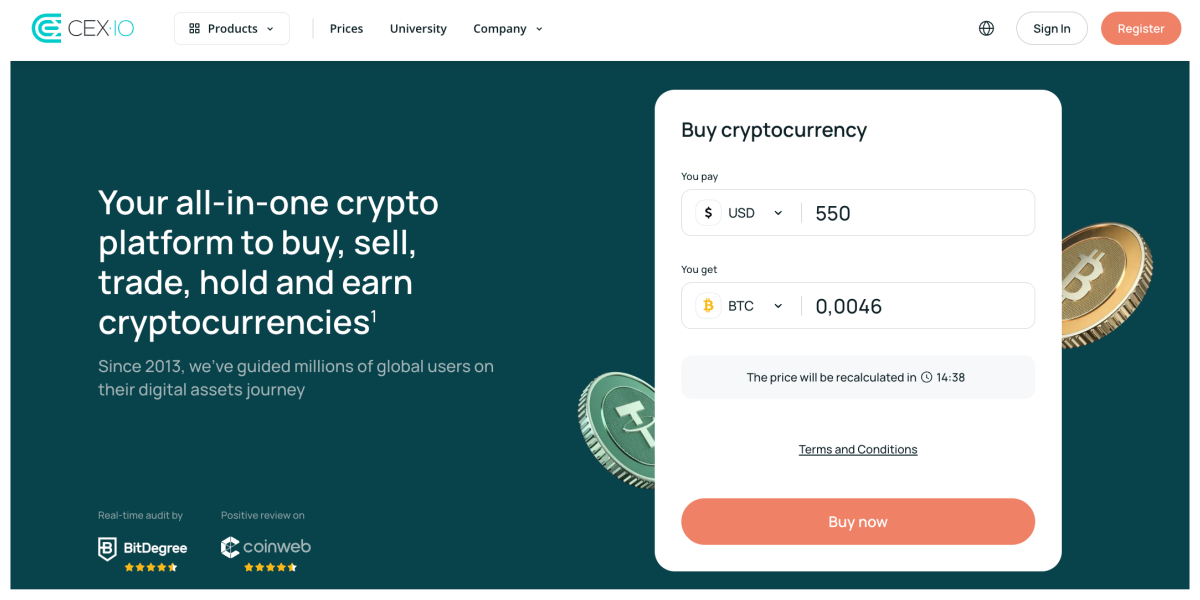
CEX.IO provides a structured and transparent approach to crypto staking and savings, designed for users who value clarity.
Instead of bundling multiple yield mechanics into one interface, CEX.IO separates staking and savings clearly. Such an approach may help users, especially novices, understand some key points, such as how rewards are generated, when they are credited, and what level of flexibility applies to their assets.
Key Features
CEX.IO Staking allows users to receive protocol-based rewards by holding supported Proof-of-Stake assets directly in their CEX.IO account.
There are no fixed lockups for staking, and your assets can remain tradable while rewards continue to be calculated.
As for rewards, CEX.IO calculates them hourly, with payouts credited monthly. This allows you to potentially track rewards more easily and adjust or move your assets without waiting through protocol-mandated unbonding periods that temporarily lock funds and halt reward accrual, like on Kraken.
Supported staking assets include (among many others):
- ATOM
- DOT
- SOL
- AVAX
- ADA
- XTZ
- TRX
- KSM
- FLR
The estimated annual reward rates vary by network. For example, if you decide to stake ATOM, you can receive up to 12% rewards, while with DOT you can expect up to 6%. These rates are set by each blockchain protocol and may change over time.
CEX.IO Savings operates separately, with Flexible Savings and Locked Savings (30, 60, or 90 days).
If you want to avoid unbonding periods or dependency on validator performance, CEX.IO offers a Savings program. This feature credits rewards daily and allows withdrawals at any time, which might make it easier to access your holdings when needed. There’s also Locked Savings, which may provide higher reward potential, such as stablecoins reaching up to 12% on longer terms.
There are no service fees for savings or internal transfers, and auto-transfer tools help move idle balances into savings without manual actions. This way, CEX.IO ensures its structure remains straightforward and flat, unlike Coinbase, for instance, which applies commissions on staking rewards.
Why Choose CEX.IO?
If you want a clear, low-maintenance way to generate potential rewards without navigating complex product layers, CEX.IO is the best place to start.
To put it into perspective, with Bybyt, you must choose between lending, on-chain staking, wealth management, and promotional campaigns. This is great if you prefer to actively compare strategies, but it also requires more upfront evaluation of risks, lockups, and mechanics.
CEX.IO’s simpler structure reduces decision fatigue and lowers the chance of misusing a product, which might be a practical advantage for users prioritising clarity over complexity.
Get crypto with your debit or credit card.
Start your crypto journey today with ease. Buy top cryptocurrencies using your debit or credit card and gain instant access to the world of digital assets.
Binance
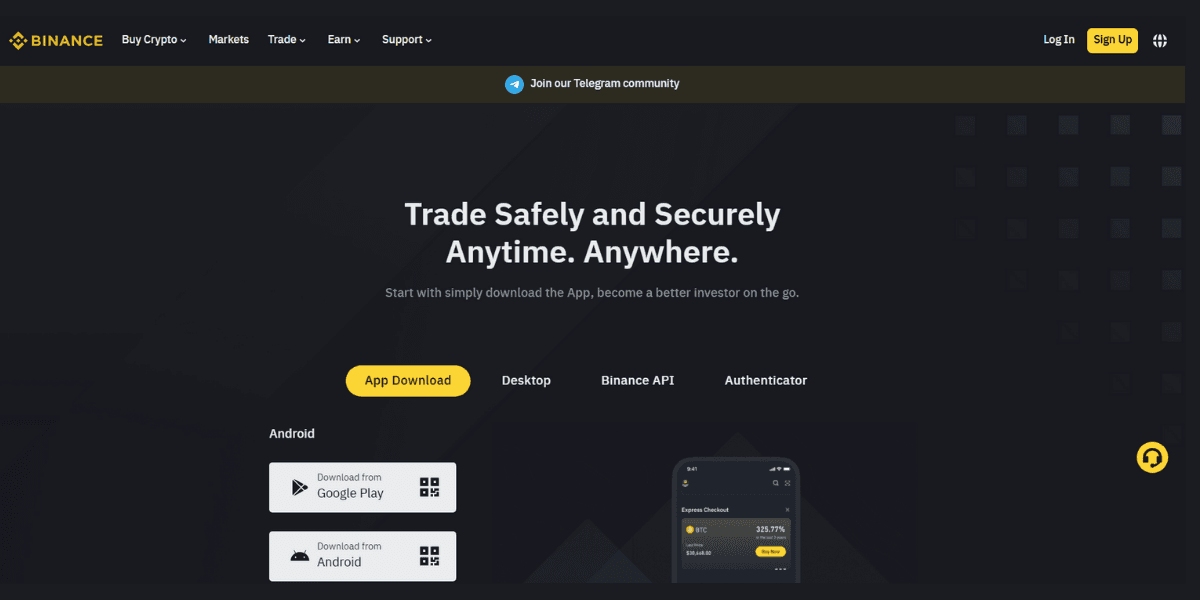
Binance provides one of the largest staking catalogues in the market, with support for a wide range of Proof of Stake networks and token-based reward programmes.
Its staking environment is built for enthusiasts who want broad asset coverage and frequent rate variations, rather than a single, fixed structure, mentioned above.
Key Features
Binance supports staking for over 100 assets, including:
- ETH
- SOL
- ADA
- DOT
- ATOM
- AVAX
- BNB
Depending on the asset, users may encounter several staking formats, such as on-chain staking, time-based staking periods, or tokenised representations of staked balances. Each format follows different network rules, including redemption delays or reward distribution schedules.
Reward estimates are protocol-driven, and Binance displays them for each product. However, the same asset can appear multiple times with different terms. For example, ATOM may be available through both standard on-chain staking and limited-time campaigns, each with different projected percentages and commitment requirements.
This structure gives users access to a wide range of networks, but also requires closer attention to product labels, durations, and eligibility limits.
Why Choose Binance?
Binance is better suited for users who want access to many staking networks and are comfortable reviewing individual product terms before committing their holdings.
This means you are responsible for selecting the correct staking format for each asset you want to commit. Experienced individuals won’t have many issues choosing the right setup, but beginners might be better served by IO’s clearly separated staking and savings flows.
Kraken
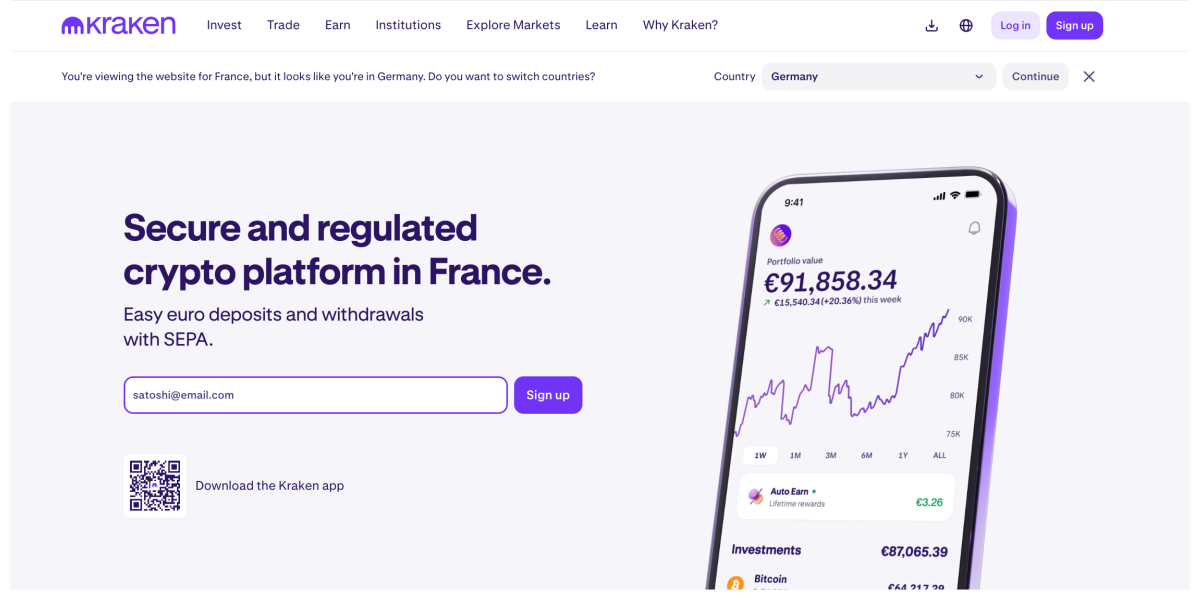
Kraken approaches staking with a strong emphasis on network-level mechanics and protocol rules.
So, instead of hiding these details, which many exchanges employ nowadays, this exchange shows how assets connect to their underlying blockchains. This can be especially engaging if you enjoy understanding how things work under the hood and want staking to feel more educational than abstract.
Key Features
Kraken supports both bonded staking and flexible staking, depending on the asset.
Networks such as Cosmos (ATOM), Polkadot (DOT), Solana (SOL), and Tezos (XTZ) are available in both formats, while others, including Ethereum (ETH), are limited to bonded staking only.
Keep in mind that bonded staking follows protocol-defined unbonding periods meaning assets remain inaccessible for a set time after unstaking. We like that Kraken clearly communicates these details to users before they participate.
Kraken also includes Auto Earn, which automatically places eligible assets into flexible staking. You can still withdraw or trade those assets, even for spot and margin activity, but they no longer count toward your margin equity once staked. This can reduce your available margin without being immediately apparent.
On the other hand, on CEX.IO, staked assets remain tradable without affecting your equity balance, which can make account management easier if you regularly move between staking and trading.
Why Choose Kraken?
Kraken may suit you if you are comfortable working with protocol-defined rules, such as waiting through unstaking periods, monitoring when rewards pause or resume, and planning around temporary access limits while a network processes withdrawals.
If you prefer a setup where staking and savings are clearly separated, and assets remain easier to manage without tracking network-specific timing, CEX.IO may be the more practical choice for both newcomers and experienced users.
Bybit
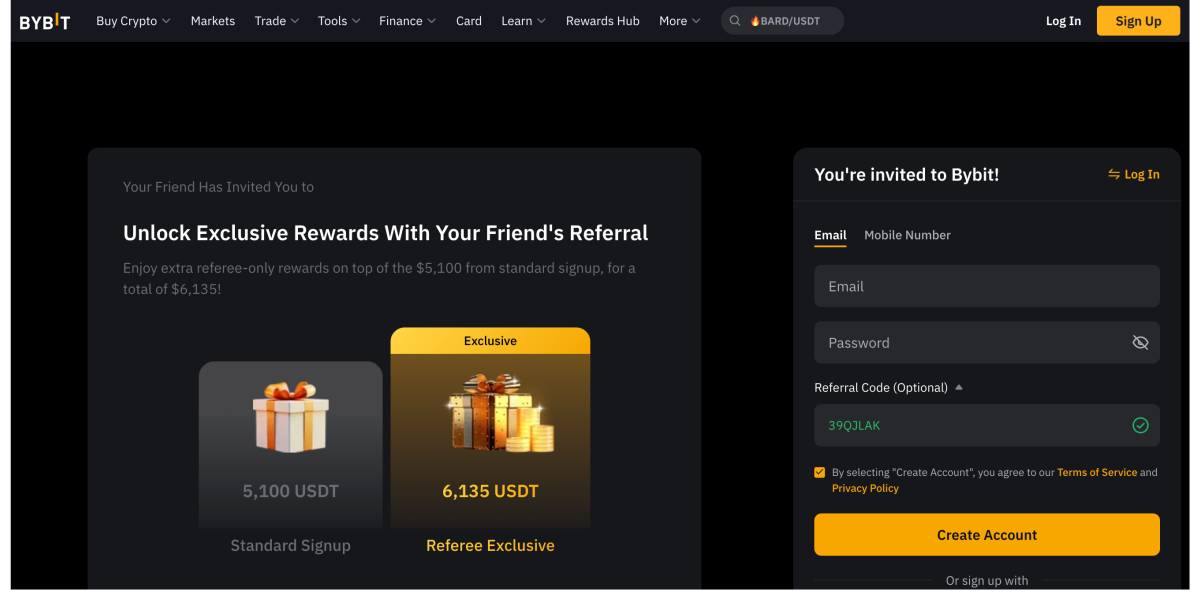
Bybit takes a multi-layered approach to staking and yield-style products. It combines on-chain participation, lending-style products, and strategy-driven programmes under one umbrella.
This makes the platform somewhat broader in scope than CEX.IO, which power users might like. But it’s also more demanding in terms of user attention, which is not something you’ll want if you’re exploring staking for the first time.
Key Features
Bybit organises its reward-based products across several categories, including:
- Easy Earn
- On-Chain Earn
- Wealth Management
However, keep in mind that each of these categories follows different mechanics.
On-Chain Earn is designed around blockchain-level participation for networks like ETH, SOL, and SUI.
This means your assets are placed into staking systems that follow the rules of each network, often through third-party providers such as Lido or Mantle. If you decide to unstake, you may need to wait until the network completes its withdrawal process before you can access your funds.
Easy Earn works differently. These products are closer to short-term asset sharing, sometimes with set timeframes, where returns depend on how long your assets are allocated. Wealth Management takes another route entirely, using exchange-managed strategies that operate in the background.
Because of this structure, the same asset, such as USDT, can appear in several sections at once, each with different time commitments and reward mechanics. This gives you a choice, but it also means you need to read product details carefully to understand how each one behaves.
Why Choose Bybit?
Bybit may suit users who enjoy actively comparing structures and tracking rate changes across different programmes.
If you like experimenting with campaign-based products or understanding how strategy-driven pools work, the platform offers plenty to explore. However, if you prefer a more predictable setup with fewer decision points, CEX.IO’s more uniform approach may feel easier to manage over time.
Crypto.com
Crypto.com takes staking as part of a broader app-centric ecosystem. This means that staking, card rewards, and account tiers are closely linked.
The platform is designed for users who already engage with its mobile app and want staking to sit alongside everyday account features rather than operate as a standalone tool.
Key Features
Crypto.com supports staking across 20+ Proof-of-Stake networks, including ATOM, NEAR, INJ, OSMO, TAO, ZETA, TON, and EGLD. Some of these, such as TON and ZETA, are not currently supported for staking on CEX.IO or Kraken, which may matter if you hold less common assets.
Estimated protocol-based rates vary by network. For example, Cosmos (ATOM) is shown at up to 14.86%, which is higher than the roughly 12% range visible on CEX.IO, while Solana (SOL) sits closer to 1.7%, notably lower than Kraken’s 2–5% flexible range. Ethereum staking is available through both native and liquid formats, with liquid staking issuing CDCETH, a tradeable representation of staked ETH.
Reward calculations are based on validator output and are reduced by Crypto.com’s commission. Access to higher rates often depends on account tiers or CRO lockups, which introduce an additional layer not present on platforms like CEX.IO.
Why Choose Crypto.com?
Crypto.com may be worth considering if you already use its app and hold assets that are less widely supported elsewhere, such as TON or ZETA. Its breadth is a strength, but tier-based rates and an app-first design mean it suits users who are comfortable managing staking alongside broader account features, rather than those who want a more neutral, standalone staking setup.
Coinbase
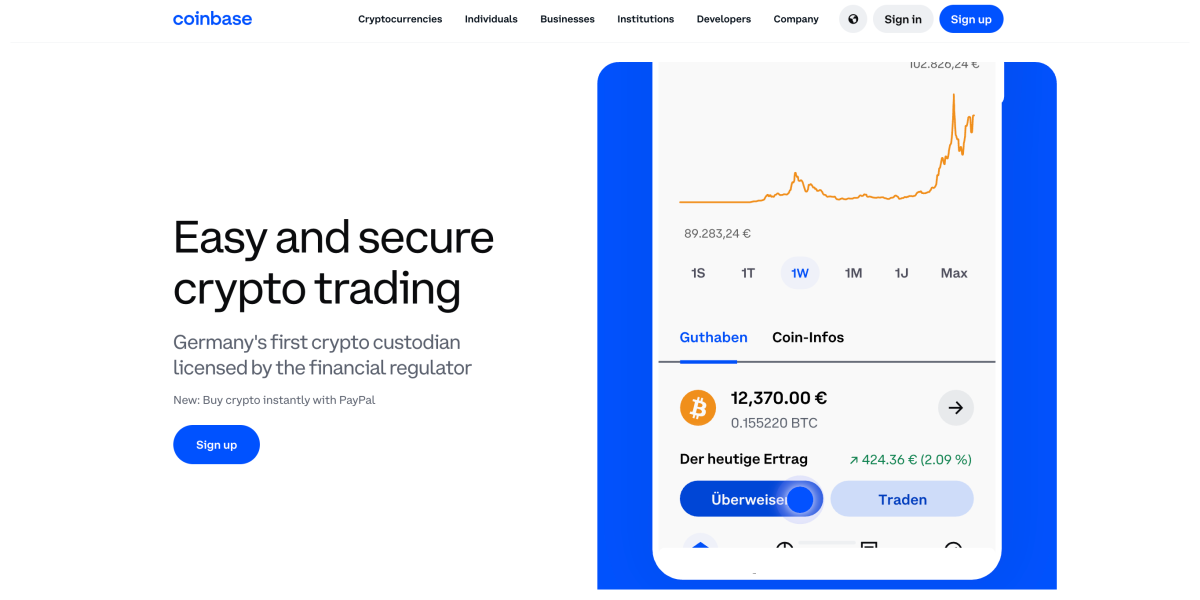
Coinbase presents staking as a guided, compliance-first service that puts regulatory alignment and infrastructure reliability above everything else.
Like CEX.IO, it aims to make participation in the protocol accessible without exposing users to operational complexity. This shapes both the assets supported and how rewards are distributed.
Key Features
Coinbase supports staking for 120+ assets, including major networks such as ETH, SOL, ADA, AVAX, ATOM, DOT, and SUI. Estimated protocol rates vary by network.
For example, Ethereum (ETH) staking is shown at around 1.7–1.8%, which is noticeably lower than the 2–3% range commonly visible on Kraken and the up to 2% range on CEX.IO. Cosmos (ATOM) appears at roughly 15%, higher than both CEX.IO’s up to 12% and Kraken’s 11–22% bonded range, depending on commitment terms.
Coinbase applies a commission to staking rewards, which reduces the final credited amount. We found this contrasts with CEX.IO, where staking rewards are passed through without an explicit platform fee and remain calculated hourly.
Unstaking timelines follow strict network rules and can range from minutes to several weeks, depending on the asset, which is clearly disclosed, but limits immediate access.
Liquid ETH staking is available through cbETH, allowing secondary market trading, though this introduces price-tracking considerations that do not apply to CEX.IO’s non-tokenised staking balances.
Why Choose Coinbase?
Coinbase is a strong choice if regulatory positioning and institutional-grade infrastructure matter most to you.
However, if you prefer a setup where staking rewards are calculated more frequently, platform fees are not deducted, and asset handling remains simpler, CEX.IO may offer a more straightforward experience, especially for mid-cap PoS assets such as DOT, SOL, and AVAX.
Buy crypto with a debit or credit card
Purchase top cryptocurrencies
Become a crypto owner using your debit or credit card.
Easily withdraw your money
Withdraw your funds to a card or bank account in a few clicks.
FAQ
What's the best platform for crypto savings?
Based on our review, CEX.IO is the strongest choice for crypto savings thanks to its clear structure and transparent terms. Flexible Savings show projected rewards of up to 4% on stablecoins like USDC and USDT with daily credits, while Locked Savings can reach up to 12% over 30, 60, or 90 days.
What are the best platforms for crypto staking?
Based on our testing, a few platforms consistently stand out for crypto staking, but the “best” one really depends on what you’re looking for. CEX.IO works well if you want clearly defined staking and savings flows with minimal setup. Kraken may appeal if you like understanding how staking works at the network level. Binance offers broad asset coverage, while Coinbase focuses on accessibility and regulatory compliance. It’s worth exploring each to see which structure, assets, and trade-offs align best with your experience level and comfort with risk.
How to choose the best crypto staking platform?
When picking a crypto staking platform, think about how hands-on you want to be. Some platforms, like CEX.IO, clearly explain where rewards come from and when they’re credited. Others expect you to track more details yourself. Also, check what happens when you stop staking. Can you access your assets right away, or do you need to wait? Finally, look at supported assets, fees, and how clearly everything is explained. The best choice is the one that matches your comfort level and how closely you want to monitor things.
What is staking crypto?
Staking crypto means holding certain cryptocurrencies in a way that supports how their blockchains operate. In return, the network may distribute protocol-based rewards over time. Instead of mining, these networks rely on participants who lock or delegate assets to help validate activity. Staking rules, timing, and payouts vary by blockchain and by platform.
Are crypto staking platforms safe?
Safety depends on both the platform and the blockchain involved. Established platforms usually explain how assets are handled, what happens during unstaking, and what risks exist, such as network issues or validator penalties. While many users stake without problems, crypto staking still carries technical, market, and regulatory risks you should understand before participating.
Are crypto staking platforms available in the US?
Some crypto staking platforms are available in the US, but access can depend on state-level rules and the specific asset. For example, certain platforms limit staking features in states like California or New Jersey. Availability can also change over time, so it’s important to check eligibility details directly on the platform before using staking services.
Are there fees for crypto staking?
Yes, but how they’re applied depends on the platform. For example, Coinbase takes a commission from staking rewards before they reach your balance, which reduces the final amount you receive. CEX.IO does not charge a separate service fee for staking, with rewards passed through as calculated by the network. On platforms like Binance or Kraken, fees may be embedded in the displayed rates rather than shown as a line item.