Best Crypto Hot Wallet
Choosing the best wallet for crypto depends on how you actually use digital assets day to day. Some users want fast access to crypto markets and integrated trading tools, while others focus on direct blockchain interaction or self-managed custody.
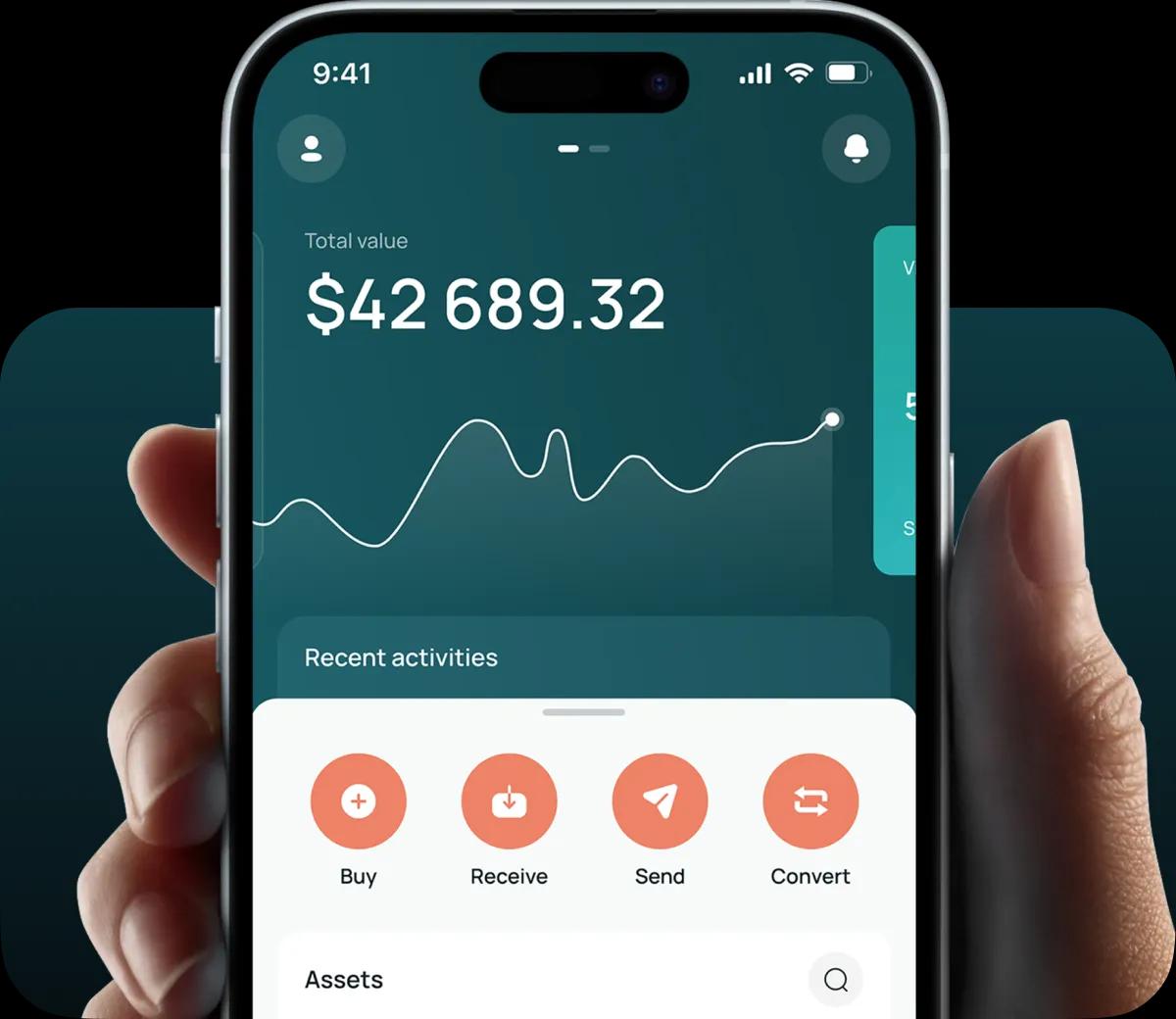
A crypto hot wallet is designed for active use. It stays connected to the internet, allowing users to store assets, track prices, send funds, trade, and interact with Web3 services without delays or manual transfers between devices.
In this guide, we review the best crypto hot wallet options available today. We explain where each wallet fits, what it does well, and where trade-offs exist, starting with CEX.IO Wallet, our top choice for users who want a secure, fully integrated crypto management experience.
Crypto Hot Wallets Compared at a Glance
Below is a concise comparison of the top crypto wallets, focusing on how they differ in asset custody, trading tools, decentralised access, and day-to-day usability.
Wallet | Custody Model | Built-in Market Tools | Web3 / dApp Access | Platforms |
CEX.IO Wallet | Custodial | Limited, exchange-linked | iOS, Android, Web | iOS, Android, Web |
Trust Wallet | Non-custodial | On-chain swaps only | Open Web3 access | iOS, Android |
Coinbase Wallet | Non-custodial | No native price execution | Open Web3 access | iOS, Android, Browser |
Bybit Wallet | Hybrid | Exchange-linked tools | Curated Web3 | iOS, Android, Web |
MetaMask | Non-custodial | On-chain swaps | Open EVM-first Web3 | iOS, Android, Web |
Trust Wallet
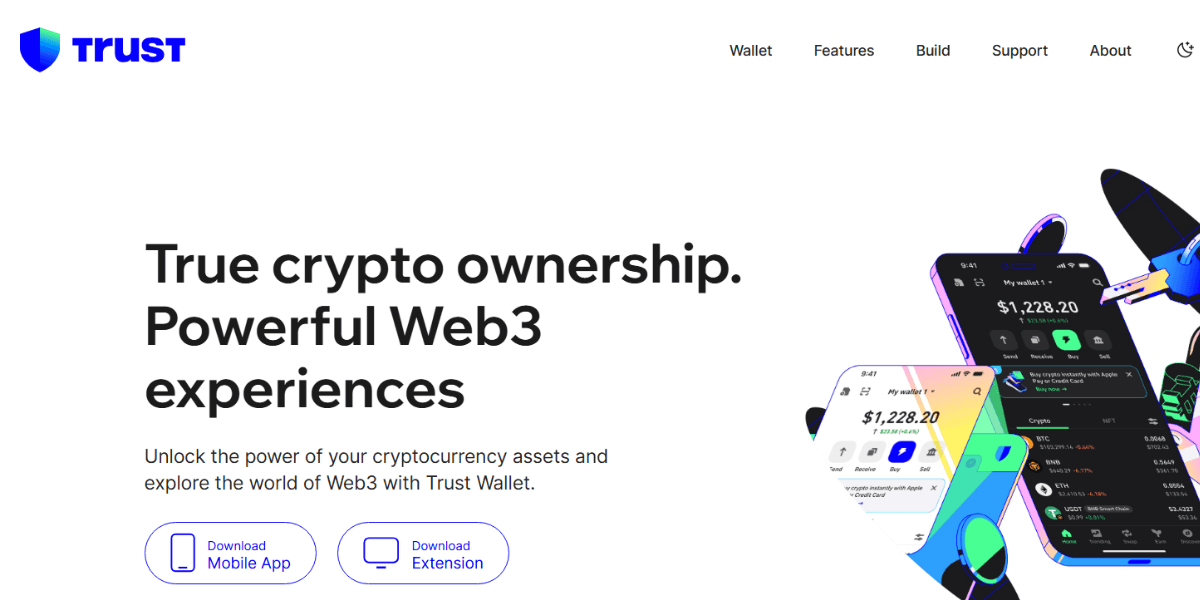
Trust Wallet is a self-custodial crypto wallet designed for users who want full control over private keys and on-chain activity.
Unlike custodial wallets, such as the one offered by CEX.IO, assets are stored directly on supported blockchains, not held by a service provider. This design gives crypto enthusiasts direct access to DeFi protocols, NFTs, and token swaps, but also places responsibility for security and recovery entirely on the user, which beginners should bear in mind.
Like most top crypto wallets, Trust Wallet supports dozens of networks natively, including Ethereum, BNB Chain, Solana, and Polygon, making it suitable for managing multi-chain portfolios.
Unlike CEX.IO, which offers both web-based and mobile app access, this wallet primarily operates as a mobile app, with an optional browser for laptop/desktop users.
Key Features
Trust Wallet’s feature set focuses on direct blockchain interaction rather than integrated trading services.
Users can store, send, and receive thousands of tokens across multiple networks without relying on internal ledgers. A built-in Web3 browser allows direct access to DeFi apps, NFT marketplaces, and blockchain games, which requires users to understand network selection, gas fees, and token approvals.
The wallet also includes a built-in swap tool that routes trades through decentralized liquidity pools, meaning pricing and execution depend on on-chain conditions. Native staking is available for selected assets, but rewards, lockups, and risks vary by network and protocol.
Trust Wallet Pros and Cons
Trust Wallet’s main advantage is autonomy. Users control private keys locally, can interact directly with smart contracts, and are not restricted to a single ecosystem.
However, this sort of flexibility introduces complexity. Users must manually manage networks, confirm contract permissions, and understand gas fees, which are not abstracted away. There’s no account recovery support if a seed phrase is lost, and no account-level safeguards such as transaction approvals beyond device security.
Unlike hot wallets offered by crypto exchanges, where you can lean on someone to help you out with account management and recovery, Trust Wallet customer support cannot reverse transactions or restore access.
For those unfamiliar with DeFi mechanics, these factors may increase the risk of errors compared with custodial wallet platforms, such as CEX.IO or Coinbase, which we cover in the following section.
Why Choose Trust Wallet
Trust Wallet suits users who actively use decentralized applications and want unrestricted access to multiple blockchains from a single interface.
It is particularly relevant for those interacting with DeFi protocols, NFT platforms, or emerging networks that may not be supported by custodial wallets. This wallet makes sense if you are comfortable approving smart contracts, switching networks, and managing gas fees manually.
On the other hand, it is less suited to enthusiasts who prefer built-in price tracking, simplified execution, or platform-level protections. Trust Wallet prioritizes control and reach over simplicity, making it best for users who value direct on-chain access and independence.
Coinbase Wallet
Coinbase Wallet is a non-custodial hot wallet built for users who want direct access to Web3 while staying close to the Coinbase ecosystem. Unlike the Coinbase exchange wallet, it stores private keys locally and gives users full control over their assets.
The wallet supports Ethereum, Solana, and other major networks, with strong NFT and dApp compatibility. It is available as a mobile app and browser extension.
Key Features
Coinbase Wallet provides direct interaction with decentralized applications, NFT marketplaces, and on-chain protocols. A built-in dApp browser simplifies access to DeFi platforms, while native NFT support includes gallery views and marketplace connections.
The wallet supports token swaps via decentralized liquidity, with execution and pricing determined by on-chain conditions. Hardware wallet compatibility adds an extra layer of security for desktop users.
However, unlike CEX.IO Wallet, Coinbase Wallet does not include an integrated cryptocurrency prices page or direct trading interface. Users must rely on external services or the Coinbase exchange app for live pricing and execution outside Web3 environments.
Coinbase Wallet Pros and Cons
Coinbase Wallet benefits from strong brand trust, broad dApp compatibility, and solid NFT tooling. It integrates smoothly with hardware wallets and supports multiple blockchains, making it suitable for advanced Web3 use.
On the downside, it lacks built-in market-tracking tools and does not allow direct trading from wallet balances, unlike CEX.IO Wallet.
Gas fees, network switching, and token approvals are handled manually, increasing friction for less experienced users. As with MetaMask, there’s no account recovery support if the seed phrase is lost, placing full responsibility on the user.
Why Choose Coinbase Wallet
Coinbase Wallet is a good fit for users who regularly interact with decentralized applications and want full control over private keys. It works best as a Web3 gateway rather than an all-in-one crypto management app.
Compared with CEX.IO Wallet, it offers deeper dApp and NFT integration but less support for active market tracking and direct execution. If you already use Coinbase services and want a separate self-custody wallet for DeFi and NFTs, it fits naturally into that workflow. Users wanting built-in pricing tools and simplified trading may prefer custodial alternatives.
CEX.IO Wallet
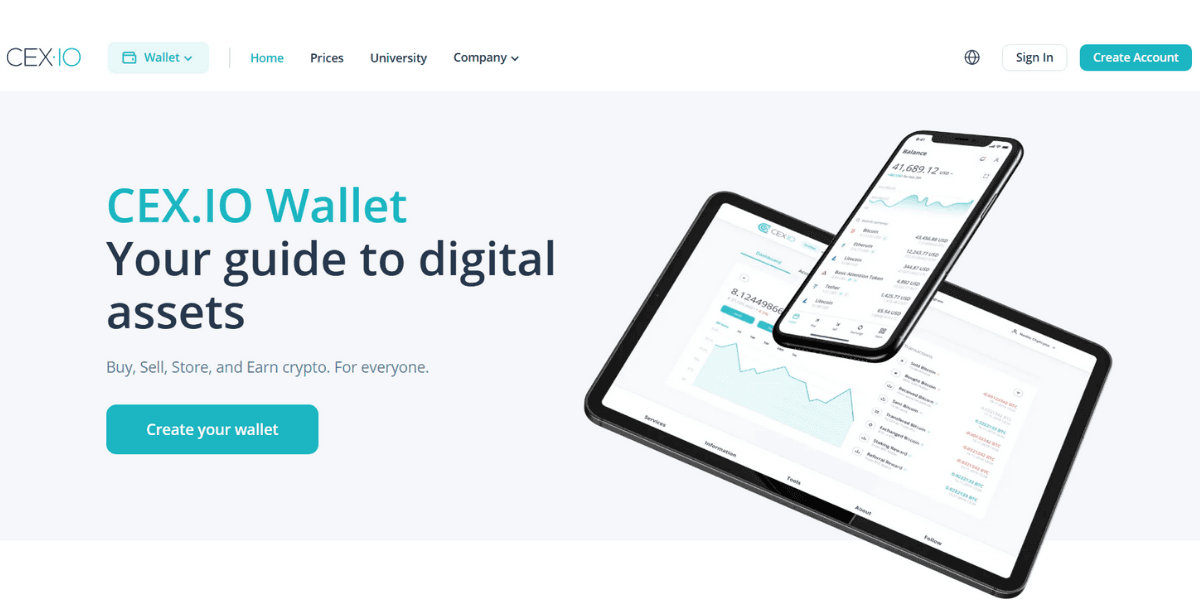
CEX.IO Wallet is the best crypto wallet for those who expect simplicity, security, and above all, functionality.
Built directly into the CEX.IO ecosystem, this free wallet allows eligible users to store, send, receive, and manage multiple digital assets without relying on external software tools or private key management.
It supports major cryptocurrencies, including Bitcoin, Ethereum, and Solana, as well as stablecoins like USDT and USDC, and integrates tightly with CEX.IO services, making account management straightforward.
For enthusiasts who prefer an all-in-one environment rather than switching between multiple tools, CEX.IO Wallet offers a clear, structured way to manage crypto holdings while keeping custody and account access under one roof.
Key Features
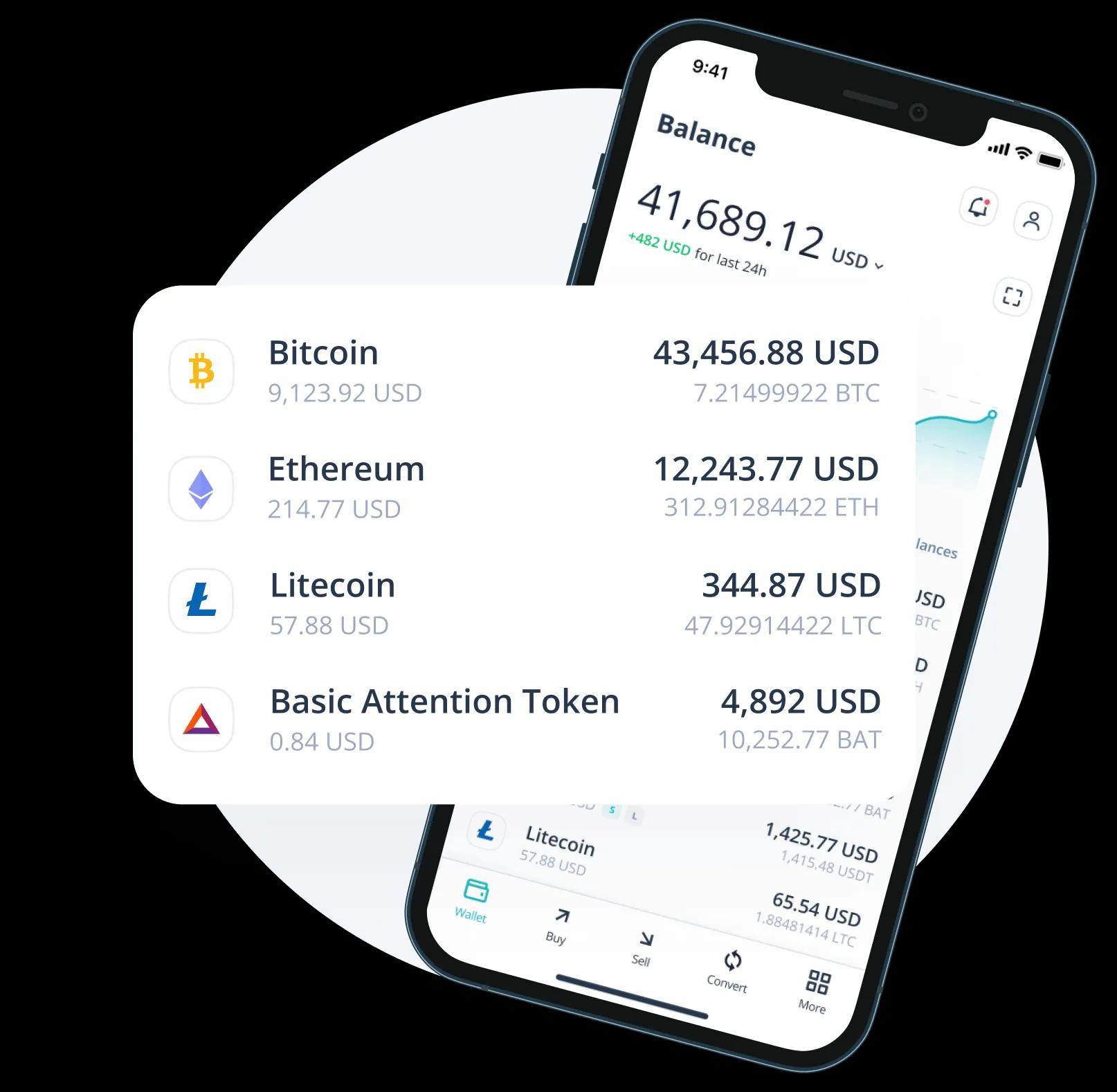
As a best crypto wallet app, CEX.IO Wallet not only provides storage but also offers live market access and execution tools. Users can monitor assets via an integrated cryptocurrency prices page, providing quick visibility into real-time market movements across different time frames and the hottest trading pairs.
The wallet also enables users to trade Bitcoin and other supported assets directly, without transferring funds externally. Security features include account-level protections and encrypted infrastructure, while the interface remains accessible for everyday use.
Multi-asset support, fast internal transfers via CEX.IO Pay, and seamless integration between wallet balances and trading tools make it suitable for users who want both price tracking and active crypto management in one app, available on iOS and Android devices.
Those who prefer using their desktops can also access the web-based CEX.IO platform, which offers the same core wallet functionality as the mobile apps. Through the browser interface, users can view balances, track prices, manage transfers, and execute trades without switching tools or syncing separate wallets.
The experience remains consistent across devices, allowing users to move seamlessly between mobile and desktop depending on how they prefer to manage their crypto day to day.
CEX.IO Pros and Cons
As a cryptocurrency wallet, CEX.IO Wallet offers clear advantages and a very few trade-offs. On the positive side, it benefits from regulated infrastructure, strong account security, and direct integration with CEX.IO services. Users avoid managing private keys manually while still maintaining control within their account. The interface is clean, beginner-friendly, and suitable for frequent use.
On the downside, it is a custodial wallet, meaning assets are held within the platform rather than fully self-managed, which may be a deal-breaker for some power users. Also, advanced customization features found in standalone wallets may be more limited than those in purely non-custodial alternatives.
Why Choose CEX.IO
For users looking for the best wallet for crypto within a regulated, structured environment, CEX.IO Wallet stands out.
This crypto wallet app is designed for people who value reliability, clear pricing visibility, and smooth transitions between holding and trading assets. Everything works within a single ecosystem, reducing friction and operational errors.
CEX.IO Wallet is particularly well-suited for users who want straightforward crypto management without relying on third-party wallets, while still benefiting from integrated tools, account security, and a familiar platform experience across devices.
CEX.IO Wallet
Manage, buy, and store crypto in one place. CEX.IO Wallet gives you full control and seamless access to your digital assets.

Bybit Wallet
Bybit Wallet sits firmly in the exchange-linked crypto wallets category. It is designed to work hand in glove with the Bybit trading platform, prioritising convenience over full independence. The wallet functions as a hot wallet and supports both custodial and non-custodial setups, depending on the wallet type selected.
This structure makes it easy to move assets between the wallet and Bybit’s trading environment without friction. Compared with standalone wallets like CEX.IO Wallet, Bybit Wallet feels more tightly coupled to its parent platform, which can be either a strength or a constraint depending on how much flexibility a user expects.
Key Features
Bybit Wallet offers native access to Web3 tools, staking pools, token swaps, and selected decentralised applications, all routed through Bybit’s ecosystem.
Users can switch between Cloud Wallet, Keyless Wallet, and Seed Phrase Wallet models, each with different trade-offs in terms of custody and security. Built-in token swaps aggregate liquidity from multiple decentralised sources, while staking is surfaced through curated pools rather than manual protocol discovery.
Unlike CEX.IO Wallet, Bybit Wallet does not prioritise live market tracking or a dedicated cryptocurrency prices page. Instead, it assumes users already rely on the exchange interface for pricing, charts, and execution.
Bybit Wallet Pros and Cons
On the plus side, Bybit Wallet reduces complexity by keeping most actions under one roof. Transfers between wallet and exchange balances are fast, and Web3 access does not require juggling multiple apps. The choice of custody models adds flexibility.
On the downside, the wallet is closely tied to the Bybit ecosystem. dApp access is curated rather than open-ended, and exporting wallets is limited outside the Seed Phrase model. Compared with CEX.IO Wallet, Bybit Wallet offers fewer built-in market-viewing tools and relies more on the exchange interface for monitoring prices and activity.
Why Choose Bybit Wallet
Bybit Wallet makes sense for users already active on Bybit who want a smoother bridge between trading tools and Web3 services. It keeps things moving without reinventing the wheel, which can save time when managing assets across staking, swaps, and decentralised apps.
That said, it is not built for maximum portability or independent price monitoring. If you want a wallet that pairs tightly with an exchange and keeps most workflows in one lane, Bybit Wallet delivers. If you value integrated pricing tools and a more neutral setup, alternatives like CEX.IO Wallet may feel less restrictive.
MetaMask Wallet

MetaMask is a hot cryptocurrency wallet built primarily around Ethereum and EVM-compatible networks. It operates as a browser extension and mobile app, acting as a direct bridge between users and decentralised applications. Unlike exchange-linked wallets such as Bybit Wallet, MetaMask is fully self-custodial, meaning users manage their own private keys at all times.
As mentioned earlier, such a design gives greater control but also shifts responsibility entirely to the user. Compared with Trust Wallet, MetaMask is more desktop-centric and deeply embedded in browser-based Web3 workflows, making it a common default for DeFi platforms, NFT marketplaces, and DAO tooling.
Key Features
MetaMask supports ERC-20 tokens, NFTs, and custom networks via manual RPC configuration, enabling access to Layer 2 networks like Arbitrum and Optimism. Built-in token swaps aggregate decentralised liquidity, though with a visible service fee. Hardware wallet integration with Ledger and Trezor adds an extra layer of security.
Compared with the more intuitive Trust Wallet, MetaMask requires additional manual configuration when using non-default networks.
Users often need to add custom RPC details themselves, including network names, chain IDs, and block explorer URLs, whereas Trust Wallet automatically detects and enables supported chains in the background.
MetaMask also requires users to manually add many tokens before balances appear, which can be confusing for less experienced users. This extra setup gives advanced users more control, but it creates a steeper learning curve for anyone new to multi-chain wallets.
MetaMask Pros and Cons
MetaMask’s biggest strength is compatibility. Most decentralised applications are built and tested with MetaMask first, so connection issues are rare. Advanced users benefit from custom networks, hardware wallet support, and deep control over transaction settings.
However, there is no native two-factor authentication, no built-in customer support, and mistakes like approving malicious contracts are harder to reverse.
Why Choose MetaMask
Considering all the above, MetaMask is best suited for users who interact regularly with decentralised applications and need maximum compatibility across Ethereum-based ecosystems.
We also found that it offers stronger desktop and DeFi tooling than Trust Wallet, while providing full control over custody.
That said, it’s obvious it demands more technical awareness and personal responsibility, which may not suit beginners right off the bat. Still, if you want a hot wallet designed for Web3 access rather than guided asset management, MetaMask remains one of the most established choices.
Alternative Cryptocurrency Wallets
CEX.IO remains our top choice as a best hot crypto wallet because it combines secure custody, real-time price tracking, and direct execution tools in one regulated environment. That said, some users may prefer alternatives for specific reasons, such as broader DeFi access, lighter self-custody setups, or a stronger focus on a single blockchain ecosystem.
When choosing an alternative, it helps to consider how you interact with crypto. Active DeFi users may prioritise dApp compatibility, while long-term holders may prefer simpler interfaces or seedless recovery. Mobile-first users may also value wallets optimised for quick interactions rather than integrated trading.
Examples worth considering include Phantom for Solana-focused users, Rabby Wallet for advanced EVM transaction previews, Exodus Wallet for desktop-friendly multi-asset management, and Zengo for users who want keyless security without managing recovery phrases.
Buy crypto instantly with card
Buy Bitcoin, Ethereum and other top cryptocurrencies securely with your debit or credit card. Fast purchases, low fees, easy withdrawals.
FAQ
What is a hot crypto wallet?
A hot crypto wallet is a digital wallet connected to the internet, designed for everyday crypto activity. It allows users to store assets, send and receive funds, interact with apps, and monitor balances quickly.
Why do I need a hot crypto wallet?
You need a hot crypto wallet if you actively use cryptocurrency rather than just holding it. Hot wallets enable fast transfers, trading, staking, and interaction with Web3 apps. They are essential for monitoring balances, responding to market movements, and accessing services that require real-time wallet connectivity, such as swaps or decentralised applications.
How to get a crypto wallet?
Getting a crypto wallet depends on the provider. With a regulated exchange wallet, you typically download the crypto wallet app, create an account, and complete identity verification. Once verified, you can buy, sell, trade, and store crypto directly within the platform.
What is the best hot crypto wallet?
The best hot crypto wallet depends on how you use crypto. For most users, CEX.IO Wallet stands out due to its regulated environment, integrated trading tools, and simple interface. It suits users who want secure storage, price tracking, and execution in one place, without having to manage complex on-chain settings.
How to set up a crypto wallet?
Setting up a crypto wallet starts by choosing the wallet type. Download the crypto wallet app or access the web platform, create an account or wallet, and secure your login credentials. Regulated exchange wallets usually require identity verification, while self-custody wallets only require a recovery phrase backup.
What is the best hot crypto wallet app?
The best hot crypto wallet app depends on how you plan to use it. For users who want integrated buying, selling, and price tracking, CEX.IO Wallet stands out. It combines a cryptocurrency wallet app with trading tools and live market data. Self-custody apps suit users focused on DeFi access instead.
How do I choose a hot crypto wallet?
Hot crypto wallets differ widely in custody model, supported assets, and built-in tools, so the best choice depends on what you expect the wallet to handle for you. Exchange-linked wallets suit users who want to buy, sell, and track prices in one place, while self-custody wallets offer greater control but require more manual setup and greater security responsibility.
Are hot wallets safe for crypto?
Yes, hot wallets are safe for crypto because they are designed with multiple layers of security that protect user funds during everyday use. Trusted providers implement encrypted infrastructure, secure key management, device-level authentication, and continuous monitoring. These protections allow users to store, send, and manage crypto assets confidently while maintaining fast access for trading, payments, and on-chain interactions.
Which is the most trusted crypto wallet?
The most trusted wallet for crypto is typically one backed by a long-established, regulated platform with a strong security record. CEX.IO Wallet stands out by combining encrypted custody, compliance-driven controls, and transparent operations, making it a reliable choice for users who value protection, stability, and long-term platform accountability.
What is better, a hot or cold wallet?
For most everyday users, a hot wallet is the better choice. It allows instant access to funds, quick transfers between assets, and direct interaction with markets, apps, and blockchain services. Users can check balances, send crypto, connect to Web3 platforms, and manage portfolios without having to move assets between devices. This makes hot wallets better suited for active use, regular transactions, and ongoing crypto management.